Pillar Four
The Innovator
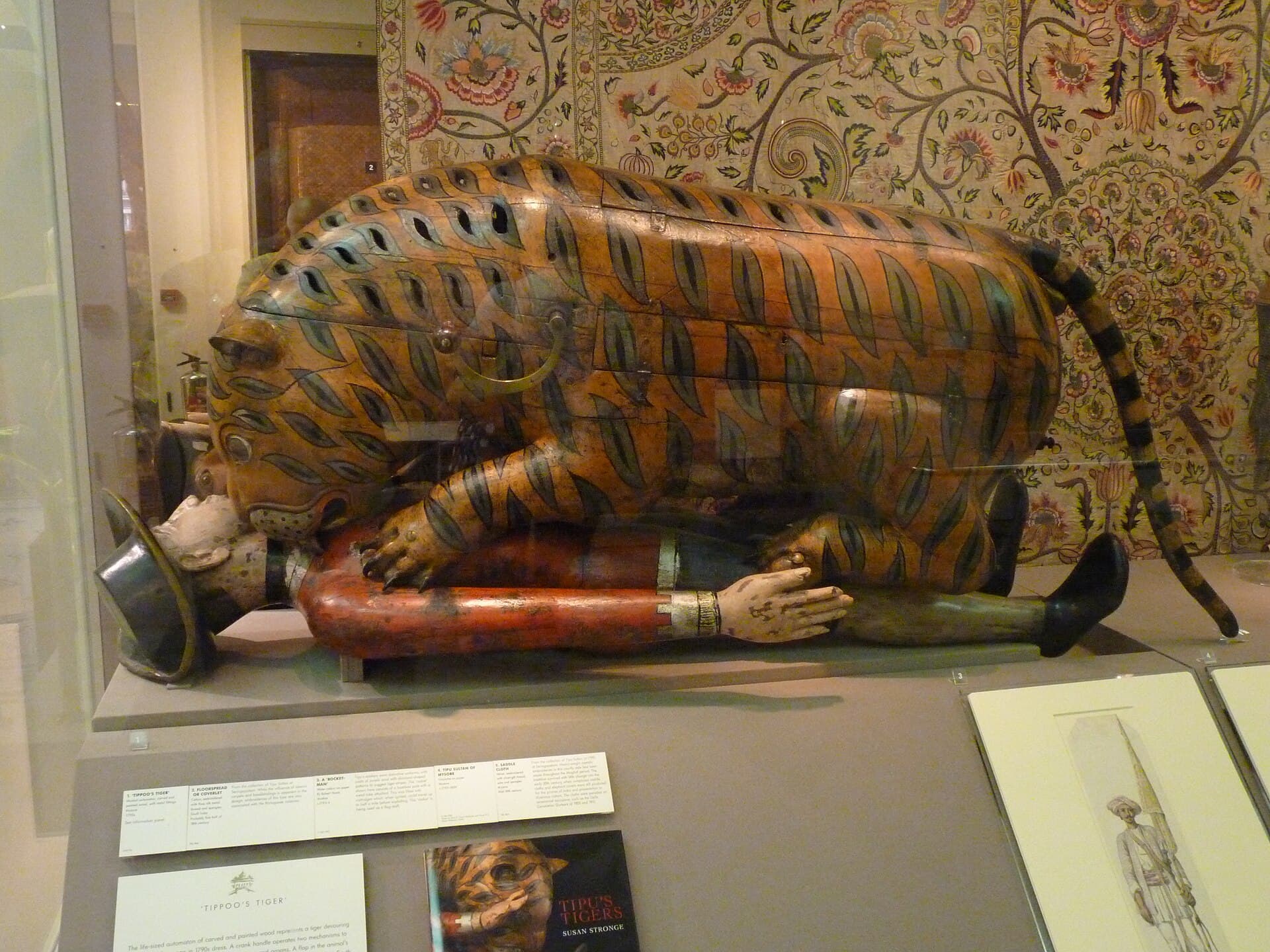
Tipu Sultan treated technology as statecraft. His Mysore cast its own cannon, reeled its own silk, built its own ships, reformed its own calendar — and fielded a weapon so effective the British took it home and copied it.
A ruler who wrote the manuals
Tipu Sultan did not merely take an interest in technical knowledge — he had it codified and issued under his own authority. The Fathul Mujahidin set out the army's establishments, ranks, drill and rocket doctrine, down to the elevation at which a rocket was to be fired, and copies went to every officer. The revenue regulations did the same for assessment and account-keeping; the commercial regulations for the state's trading houses. Where other rulers of the period relied on the experience of the men in front of them, he had the practice written down so that it could be taught, checked, and repeated.
The acquisition of knowledge served that end rather than replacing it. His captured library held works on gunnery, metallurgy and medicine; his correspondence orders specific machine parts, seeds and craftsmen from France, Persia and the Ottoman lands; his embassies carried standing instructions to recruit artisans — clockmakers, founders, glassblowers, weavers — and bring them to Mysore. He tested and criticised musket patterns himself.
The point was never curiosity. Every acquisition targeted a dependency — on Company trade, on imported arms, on foreign expertise — and the way a dependency is actually ended is by turning what a foreign specialist knows into a procedure your own people can follow without him. That is what the manuals were for.
The workshops of the state
Arms. Foundries and armouries at Srirangapatna, Bangalore, and Chitradurga produced cannon, muskets with domestically made flintlocks, and edged weapons — including blades the conquerors of 1799 thought fine enough to send home as trophies.
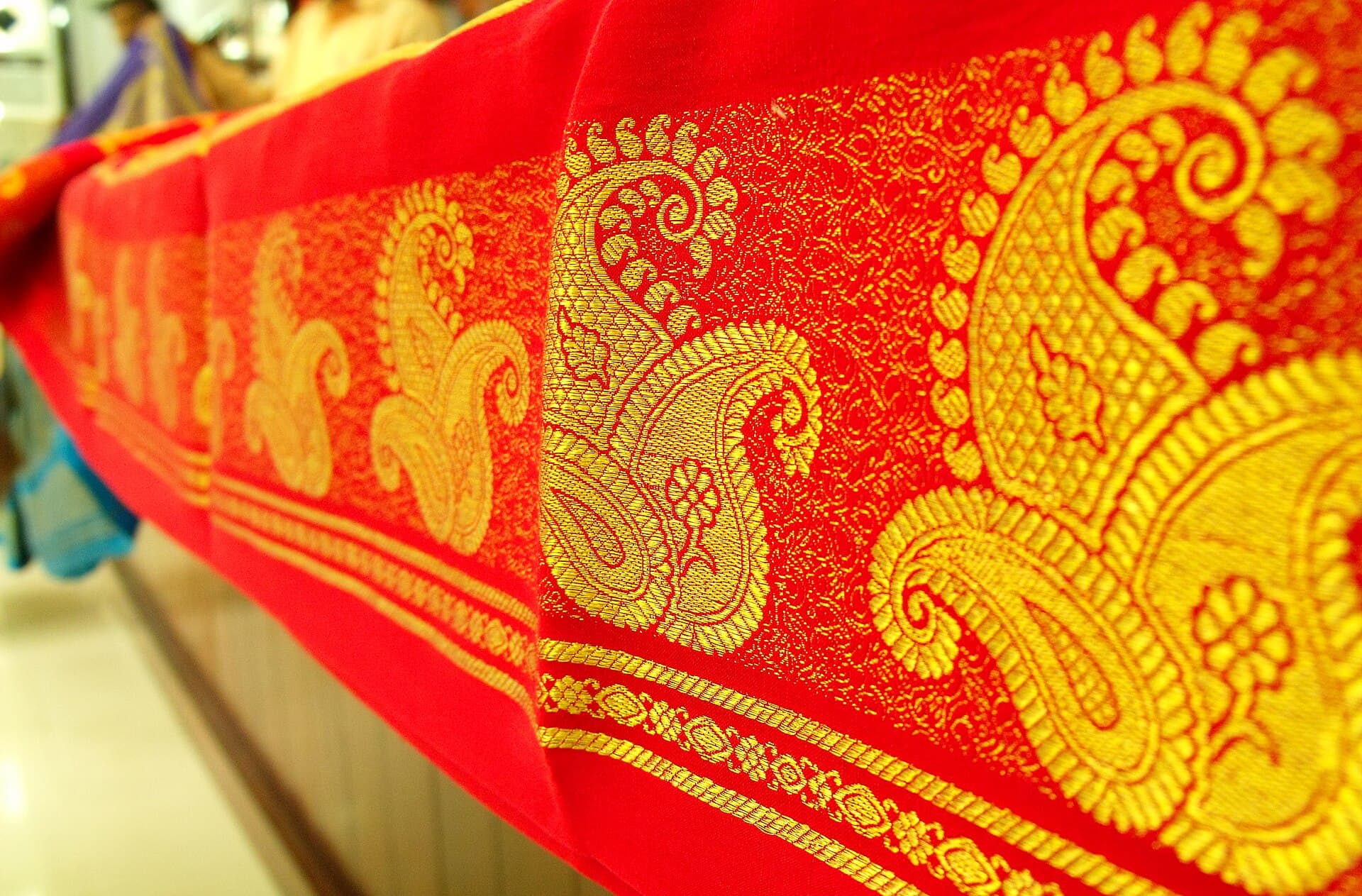
Silk. Tipu Sultan introduced sericulture to Mysore in the 1780s, importing silkworm stock and expertise and establishing rearing centres across the kingdom. The industry survived him; Mysore silk remains the state's signature luxury product and is his most tangible living legacy.
Other manufactures. State works produced paper, glass, sugar (with attempts at Chinese-style refining), scissors and cutlery, and gunpowder. Shipyards at Mangalore and on the coast were building a navy to French designs when the final war came.
Measures of a new state
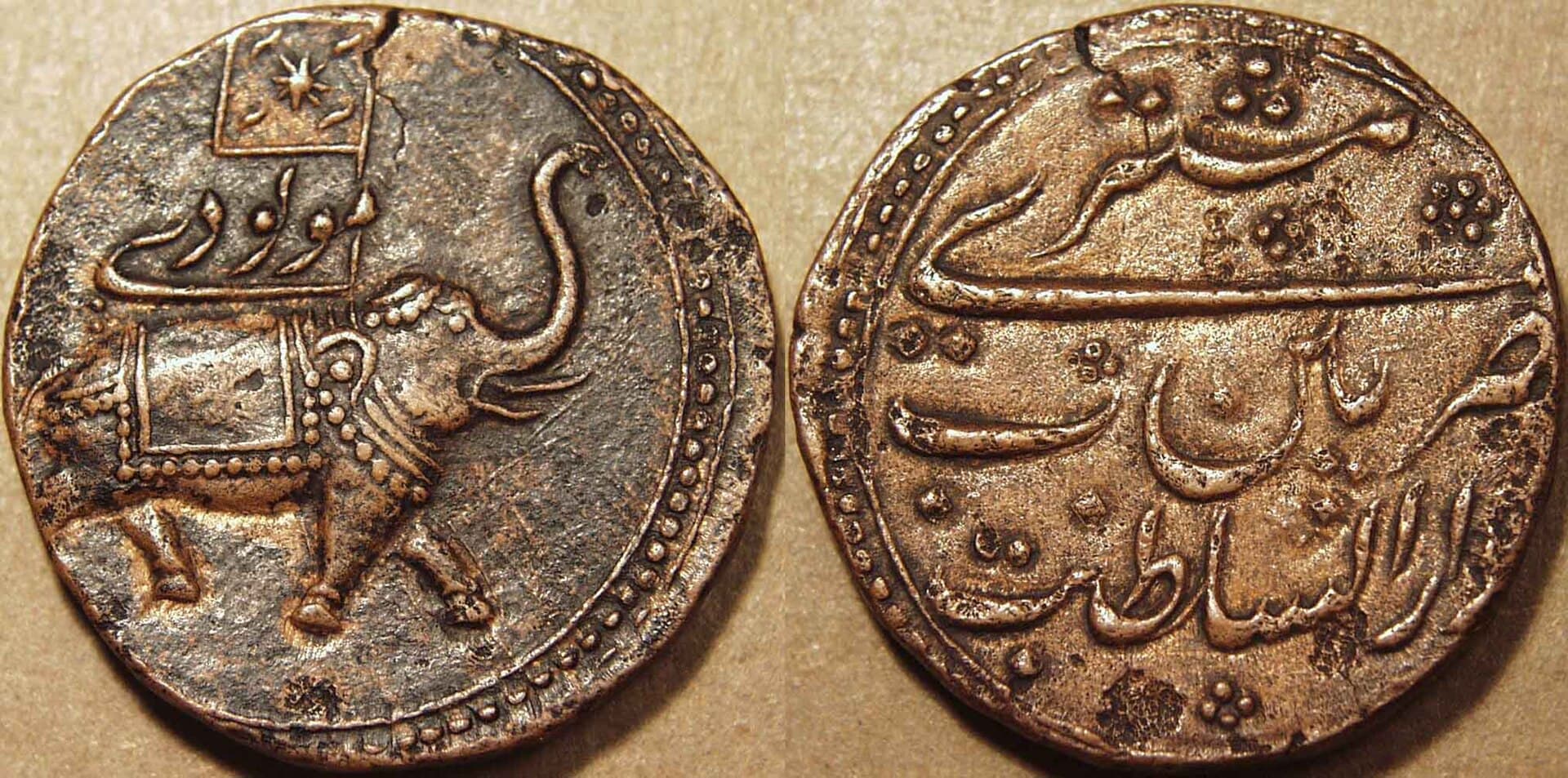
Like revolutionary France in the same decade, Tipu Sultan understood that measurement is sovereignty. He issued a new coinage of exceptional quality with denominations named after saints and early Islamic figures, introduced new weights and measures, renamed forts and towns, restructured administrative vocabulary in Persian, and promulgated a new lunisolar calendar with a new era (the Mauludi era, dated from the Prophet's birth rather than the Hijra) and renamed months and years. Every coin, document, and date in Mysore declared that this was a new order, owing nothing to Mughal, Maratha, or Company precedent.
The flagship story
Mysorean Rockets →
The world's first iron-cased war rockets: what existed before Mysore, what Haidar and Tipu Sultan changed, and how the technology travelled — Srirangapatna to Woolwich to the world.
Read →
The Economic State
The industrial programme was one arm of a larger design — state trading houses, monopolies, and a treasury that took deposits. Covered under The Sultan.
Read →
Abdul Kalam & the Rocket
India's Missile Man found Tipu Sultan's rocketmen painted on the wall of a NASA facility — a history remembered abroad and forgotten at home.
Read →
The Military System
Where the factories' output went: the army, artillery, fortresses, and navy of the Sarkar-i-Khudadad.
Read →
Mysore → Britain → world
The final irony of Tipu Sultan's technological programme is that its most successful export was involuntary. After 1799 the British shipped captured Mysorean rockets, ordnance, instruments, and the contents of his library to Britain for study. The rockets went to the Royal Arsenal at Woolwich, where William Congreve developed the Congreve rocket that Britain used from Boulogne and Copenhagen to Baltimore in 1814 — the “rockets' red glare” of the American national anthem descends, by a direct and documented line, from the workshops of Srirangapatna.
What travelled was a formation, not only a weapon. Mysore's real innovation was organisational: rocketmen were not a curiosity attached to the army but a defined branch of it, 200 to every brigade, with their own doctrine written into the military code. Britain copied the unit as well as the projectile. Rocket troops were raised in 1813, fought at Leipzig that October as the Rocket Brigade under Captain Richard Bogue — killed there after breaking five French and Saxon battalions at Paunsdorf — and were formalised into troops of the Royal Horse Artillery in 1814. The United States raised its own rocket battery for the Mexican–American War of 1846–48.
The lineage is still in the order of battle. The British Army maintains O Battery (The Rocket Troop), Royal Horse Artillery — a unit whose name and origin trace back to the weapon its army first met being fired at it from Mysorean lines. The full story →
Sources for this page
- Irfan Habib (ed.), Confronting Colonialism — essays on technology and economy under Tipu Sultan.
- Mohibbul Hasan, History of Tipu Sultan — chs. on trade, industry, and coinage.
- Roddam Narasimha, 'Rockets in Mysore and Britain, 1750–1850' (NAL, 1985).
- Buchanan, A Journey from Madras… (1807) — observations on Mysore industries immediately after 1799.
Full bibliography and how we weigh sources: Sources & Method