Pillar Five
The Diplomat
Tipu Sultan understood earlier and more clearly than any contemporary Indian ruler that the East India Company could only be beaten by a coalition. For twenty years he tried to build one — from Versailles to Constantinople to Kabul — and the story of why it never came together is the story of why Mysore fell.
- To Constantinople
- 1785–1789
- To Versailles
- 1787–1788
- Largest mission
- c. 900 people
- Last envoy
- Persia, summer 1799
Mysore at the centre
Picture the map with Srirangapatna at its centre and lines running outward: west by sea to Muscat, the Gulf, and France; northwest overland to Persia and Afghanistan; north to the Ottoman caliph; and nearer home, the tangled triangle of Pune, Hyderabad, and Madras. Tipu Sultan maintained agents and correspondence along every one of these lines. Irfan Habib's State and Diplomacy under Tipu Sultan collects the surviving documents, including the written briefs he gave his ambassadors — instructions so specific that we know how he told them to bow.
The analysis behind it was acute. He identified the Company's power as seaborne, financial, and coalition-based, and attacked each element: a Gulf trade network beyond British reach, a European ally with a fleet, an overland threat from Kabul, and legitimacy from the caliph to outrank his Indian rivals. Each connection below has its own page — why he reached out, what he offered, who he sent, and what came back.
France
No army. A casus belli.The great bet: an embassy received by Louis XVI at Versailles in 1788, a Jacobin club at Srirangapatna, the disastrous Malartic Proclamation, and Napoleon's letter from Egypt — intercepted by the British and turned into a case for war.
Read the full page →
The Ottoman Empire
Recognition granted. Everything else refused.Nine hundred people sent to Constantinople to ask the caliph for sovereignty, the port of Basra in exchange for Mangalore, the right to fund the shrines at Najaf and Karbala, and an army against the British.
Read the full page →
Oman & the Gulf
Real, functioning — and cut short.State trading houses at Muscat and in the Gulf, negotiations with the Imam of Oman, and an attempt to build an Indian Ocean commercial network the East India Company neither controlled nor taxed.
Read the full page →
Persia & Afghanistan
Contained by British diplomacy.The northern gambit: pressing Zaman Shah Durrani to invade north India and open a second front, and courting Fath Ali Shah of Persia. The last embassy reached the Gulf weeks after its sender was dead.
Read the full page →
The Marathas
Joined the coalition, 1790.The neighbour he beat in the field and then deliberately gave generous terms, hoping to buy neutrality for the war he knew was coming. Pune joined the British anyway.
Read the full page →
Hyderabad
Became the Company's instrument.A rival Muslim state contesting Islamic precedence in the Deccan, which Wellesley bound into a subsidiary alliance in 1798 — closing the last route to an Indian coalition.
Read the full page →
The East India Company
War, 1799.Three treaties in thirty years — Madras, Mangalore, Seringapatam — a broken mutual-defence clause, two sons given as hostages, and an ultimatum drafted to be refused.
Read the full page →
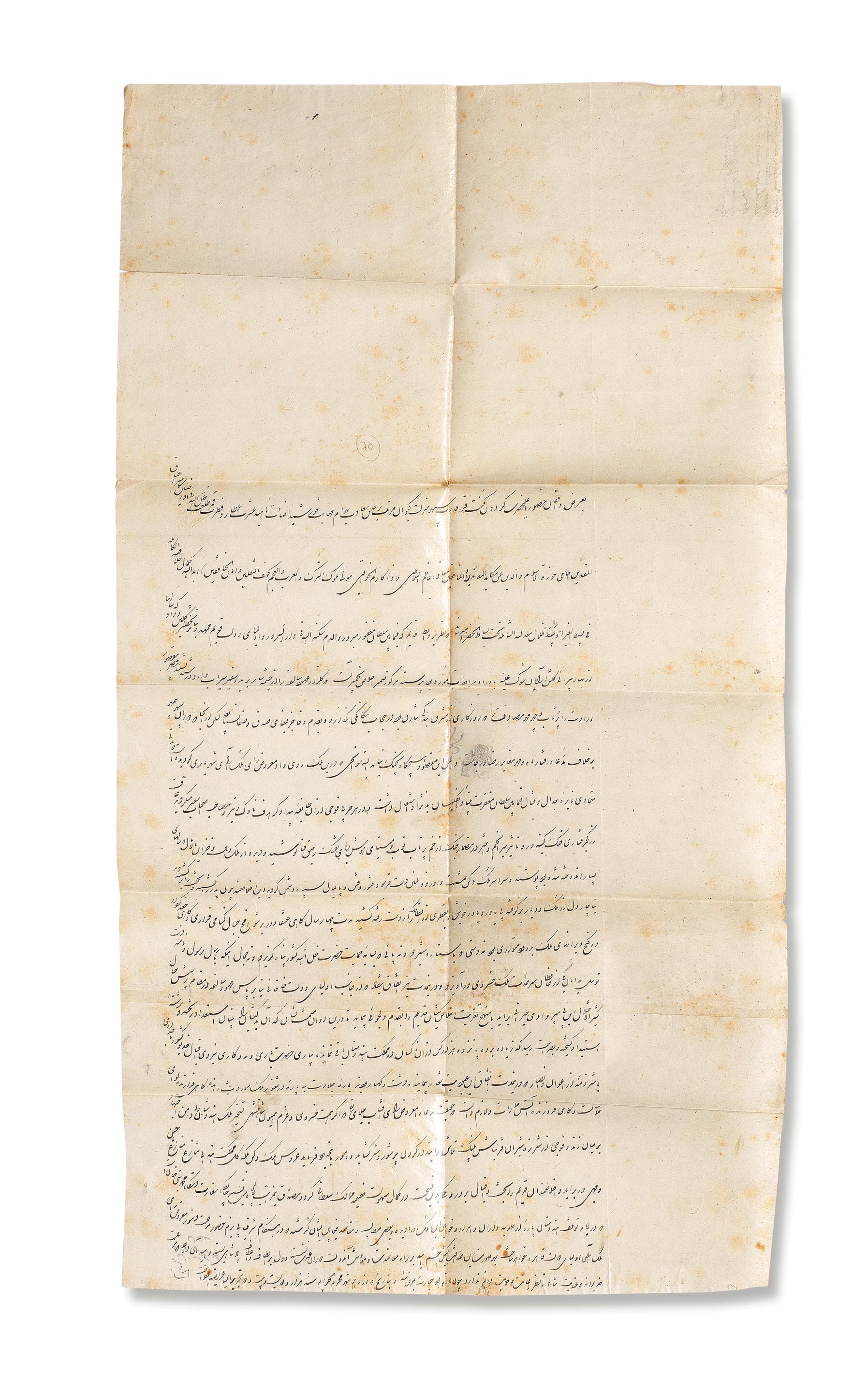
The verdict on the diplomacy
What is not in dispute is the ambition. No other Indian ruler of the century sent nine hundred people to Constantinople, offered a caliph a port, proposed to fund a canal at Najaf, corresponded with Bonaparte, and still had an embassy in the field on the day he died. See The Wars for what happened when the diplomacy ran out.
Sources for this page
- Irfan Habib (ed.), State and Diplomacy under Tipu Sultan: Documents and Essays (2001) — including the ambassadors' briefs for Turkey and France, 1785–86.
- Mohibbul Hasan, History of Tipu Sultan — chapters on foreign relations and the embassies.
- I. H. Qureshi, 'The Purpose of Tipu Sultan's Embassy to Constantinople', Journal of Indian History 24 (1945).
- A. K. Pasha, 'Tipu Sultan's Relations with the Ottoman Empire' (1992) and 'South India and the Gulf' (2003).
- M. Choudhury, 'Tipu and the Turks: An Islamicate Embassy in the Age of British Expansion', Itinerario (2023).
Full bibliography and how we weigh sources: Sources & Method