The Wars · 1767–1769
The First Anglo-Mysore War
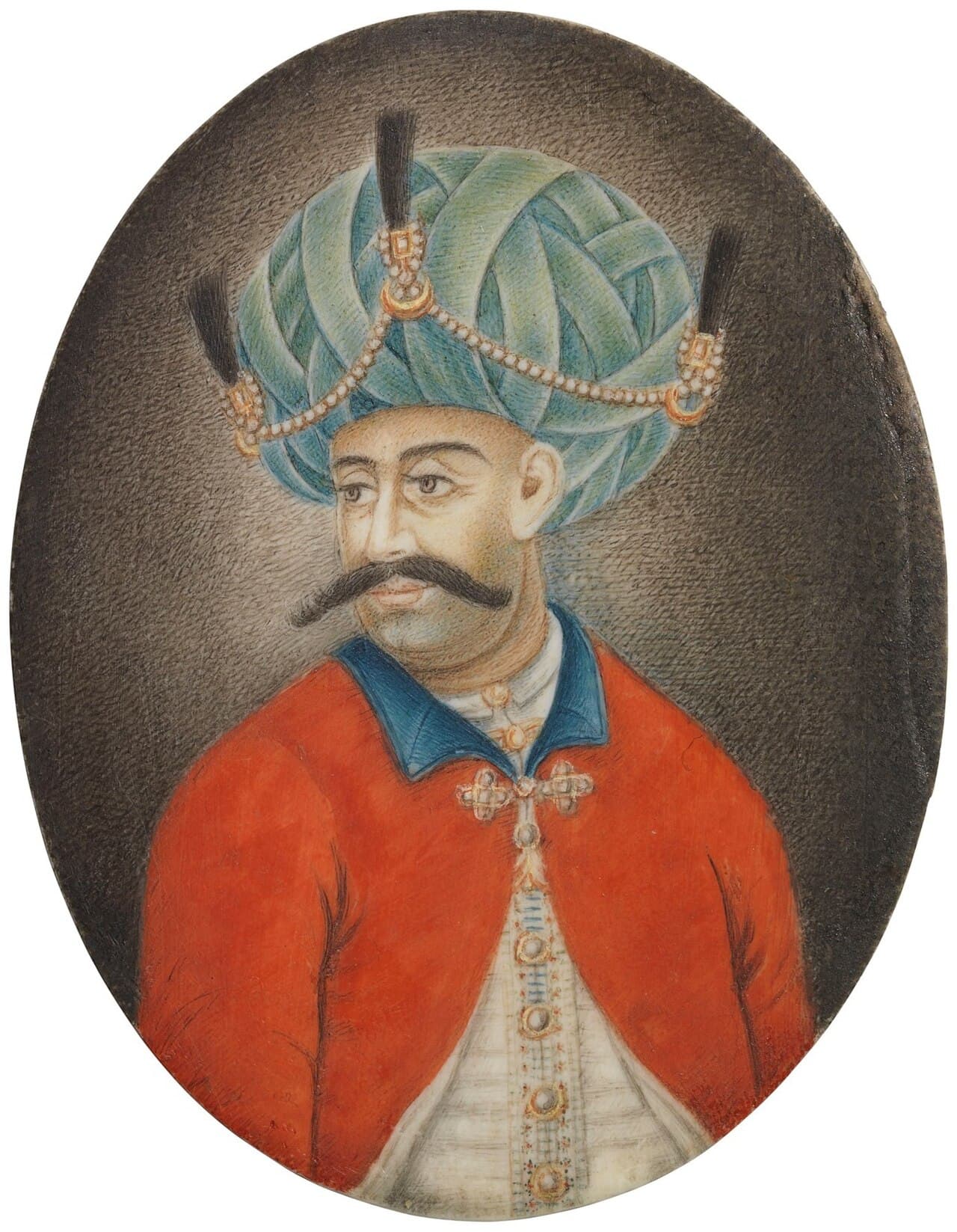
Haidar Ali's war, and his son's education. It ended with a Mysorean army camped outside Madras dictating peace — and with a broken British promise that shaped everything the House of Haidar did for the next thirty years.
- Years
- 1767 – 1769
- Mysore
- Haidar Ali
- Against
- Company, Nizam, Marathas
- Ended
- Treaty of Madras
Objective and origins
By the mid-1760s Haidar Ali had made himself master of Mysore in all but name and had expanded aggressively toward the coast. The East India Company at Madras, alarmed by a strong military state on its inland frontier, did what it would do in every subsequent Anglo-Mysore war: it built a coalition. In 1766 it drew in the Nizam of Hyderabad and the Marathas, and the three powers agreed to partition Mysore between them.
Haidar's war aim was therefore simple and defensive: break the coalition, then punish whoever was left. He did both.
Forces and commanders
Mysore fielded a large, fast army built around light cavalry — the arm in which it held a decisive advantage — with French-trained infantry and a growing artillery park. Haidar commanded in person. His son Tipu Sultan, then about seventeen, held cavalry commands: this war was his apprenticeship.
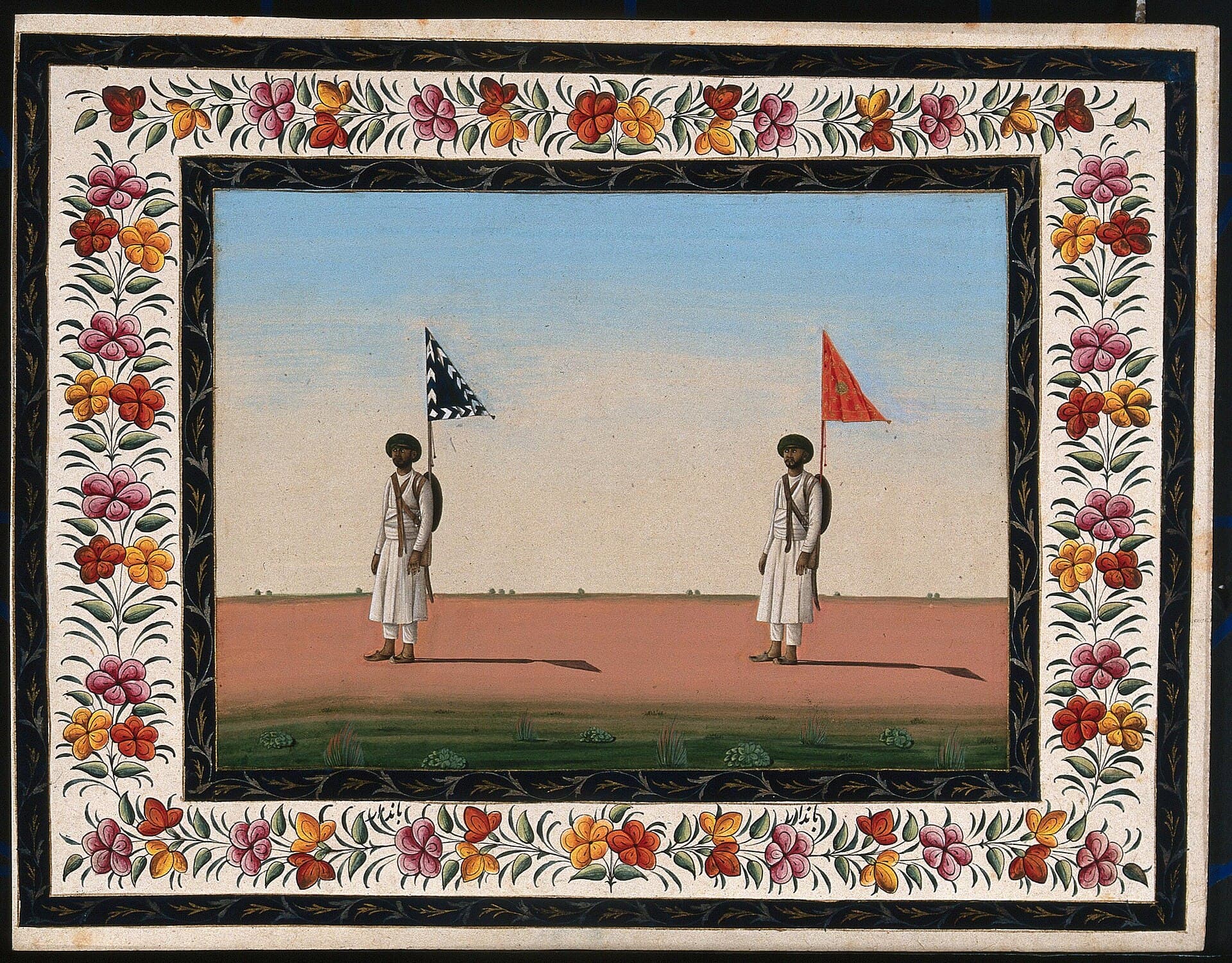
The Company's field forces were small but disciplined — Colonel Joseph Smith led the main army of roughly 7,000 — and its real strength was diplomatic: the alliance system that put Hyderabad and Maratha armies in the field at Mysore's expense.
How the two armies formed for battle
The tactical mismatch in this war explains everything that followed in the next thirty years, and it is worth setting out plainly, because the two sides were not trying to fight the same kind of battle at all. The diagram below shows the geometry of the problem.
The Company's formation. A Company army deployed in line: two or three ranks of infantry, European and sepoy battalions alternating, with field guns run forward into the intervals between battalions and cavalry — always the weakest arm — held on the flanks. Its entire effectiveness rested on discipline under fire: the ability to stand in the open, hold formation while taking casualties, and deliver volleys on command at close range, then close with the bayonet. Threatened by cavalry, the battalions formed square, a hollow box bristling outward that horsemen could not break so long as nobody flinched. A well-drilled square was, in practice, invulnerable to cavalry alone — which is why the arithmetic of numbers so rarely favoured the larger Indian armies in a set-piece action.
The Mysorean formation. Haidar Ali's army was built the other way round, around horse. Its core was a mass of light cavalry — the arm in which Mysore held a decisive superiority — screening the advance, enveloping the flanks, and ranging far to the rear. Behind the screen came French-trained regular infantry, a growing park of artillery, and rocketmen whose weapon was at its most effective precisely against the dense formations European drill required. The army moved with a speed no Company force could match, because it was not tied to a siege train and drew supplies from the country it crossed.
Why Chengam and Tiruvannamalai went the way they did. At Chengam on 3 September 1767 a combined Mysore–Hyderabad army of perhaps 70,000 attacked Colonel Smith's roughly 7,000 and was repulsed. Three weeks later at Tiruvannamalai the same thing happened more decisively. Ten-to-one odds counted for little when the smaller force could not be broken by shock and the larger could not concentrate its numbers against a formation that kept its shape. On the ground the Company chose, the Company won.
Haidar's answer. He stopped offering that battle. Instead he used the formation he actually had — mobility — against the thing the Company could not protect: its supply, its scattered garrisons, and its undefended political centre. Cavalry that cannot break a square can still starve the men standing in it, and can appear outside Madras before anyone in Madras knows it has moved. That is the shape of every subsequent Mysorean campaign until Cornwallis found allies who could keep a British army fed.
- Company infantry (line, then square)
- Field guns
- Mysorean light cavalry
- Mysorean regular infantry
- Rocket fire
The campaign
Diplomacy first. Haidar bought the Marathas off, then went further and detached the Nizam entirely, converting an enemy into a co-belligerent — the alliance the Company had assembled was fighting alongside Mysore within a year of forming.
Chengam, 3 September 1767. The combined Mysore–Hyderabad army, perhaps 70,000 strong, attacked Smith's force of about 7,000 and was repulsed with heavy loss — a first demonstration of the pattern that would define these wars: numbers did not translate into victory against disciplined infantry and artillery in a set-piece action.
Tiruvannamalai, 26 September 1767. A second attack on Smith produced a second, more decisive British victory. The Nizam, unimpressed and already in secret contact with the Company, abandoned Haidar and formally allied with the British in 1768.
Tipu Sultan's first commanding foray — the raid on Madras, September 1767. While Smith was beating his father in the field, Tipu Sultan — given his first command that June, under his military tutor Ghazi Khan — was loose in the Company's home districts. His horse plundered St Thomé and the garden houses of the Madras councillors themselves, and threw the town into panic, until a letter from Haidar recalled him after Tiruvannamalai. Major Fitzgerald and Colonel Tod tried to cut off his retreat; he was too quick for both, and rejoined the main army in its camp near Vaniyambadi, where his father received the boy — not yet seventeen — as the one commander who had good news to bring. It was the first anyone in Madras had heard of him. It would not be the last.
The winter counter-offensive, November–December 1767. The monsoon did not stop Haidar. In early November he marched from Kaveripatnam against Tirupattur and Vaniyambadi, which had fallen back into British hands, with Tipu Sultan serving alongside him — his first fort operations. At Vaniyambadi the garrison of about a thousand sepoys and thirty European gunners faced a battery hauled onto a ridge above the town overnight, and capitulated the morning it opened fire. De la Tour, the French general in Haidar's service, adds a detail no other source has: when his European artillery commander was wounded during the emplacement, Haidar sat under a tree by the battery and directed the work himself, under fire, until the man returned. The streak ended at Ambur, where four weeks of siege broke against a determined garrison and Haidar withdrew as British relief approached. The year closed with the war balanced: the Company held the battlefield victories, Mysore the initiative.
The march on Madras, 1769. Haidar adapted. Rather than fight more pitched battles, he used his cavalry as it should be used: he broke contact, moved with extraordinary speed across the Carnatic, and appeared in March 1769 in the outskirts of Madras itself, his horsemen at the edge of the settlement. The Company's government, its army elsewhere and its capital undefended, sued for peace within days.
Outcome — and the clause that mattered
The Treaty of Madras was signed on 3 April 1769. Its terms were straightforward: mutual restitution of all conquests, exchange of prisoners, resumption of trade. Crucially, it also contained a clause of mutual defence — each party would aid the other if attacked by a third power.
When the Marathas invaded Mysore in 1771, Haidar invoked it. The Company did nothing. That refusal became the foundational grievance of the dynasty: it is the reason Haidar entered the next war as a committed enemy rather than a wary neighbour, and the reason Tipu Sultan never afterwards accepted a British guarantee at face value. More than any battle, it explains the thirty years that followed.
Historical significance
For the Company, a humiliation and a lesson: never fight Mysore without allies. For Mysore, proof that speed and diplomacy could beat discipline and money — a lesson that worked twice more and then stopped working. And for Tipu Sultan, a first education in the two things that would define his career: the potency of a fast-moving army against an enemy dependent on supply, and the unreliability of everyone else's promises.
Sources for this page
- Mohibbul Hasan, History of Tipu Sultan (1951; rev. 1971), ch. I — Tipu Sultan's first command, the Madras raid, and the Tirupattur–Vaniyambadi–Ambur operations.
- M. M. D. L. T. (Maistre de la Tour), The History of Ayder Ali Khan (London, 1784) — Haidar Ali's French general; sole source for Haidar directing the Vaniyambadi battery in person, and for the garrison's strength.
- Irfan Habib (ed.), Confronting Colonialism (2002) — on Mysore's army under Haidar Ali.
- Mark Wilks, Historical Sketches of the South of India (1810–17) — colonial, detailed, hostile.
- C. Hayavadana Rao, History of Mysore 1766–1799 (1946).
- Treaty of Madras (1769), in Aitchison's Treaties, Engagements and Sanads.
Full bibliography and how we weigh sources: Sources & Method