Dawn
A capital under bombardment
The siege is in its fifth week. British batteries across the Kaveri have beaten the north-west angle of the walls into a practicable breach; the river between them is at its dry-season lowest. Inside the fort, Tipu Sultan has spent the night in a small tent near the ramparts rather than the palace, as he has throughout the siege.
Morning
Omens and alms
The Mysorean chronicle records a morning of unease: Tipu Sultan is told of ill omens, consults his astrologers, and distributes alms — an elephant, money, oil — to avert them. He inspects the walls, receives reports that an assault is expected, and eats his midday meal by the ramparts. Whether he believed the attack would come that day is unknowable; his dispositions suggest he expected it at night.
~1:00 pm
The storm begins
General Baird — once a prisoner in this fort for over three years — rises from the British forward trench, sword drawn, and leads some 4,000 men of the storming columns into the riverbed at the hottest hour of the day, chosen precisely because the garrison rests at midday. The forlorn hope crosses the shallow water under fire; the breach is won in roughly six or seven minutes.
~1:15 pm
Two columns along the walls
On the summit of the breach the stormers split as planned, one column fighting left, the other right, rolling up the ramparts from both directions. Resistance is fierce but local; the defenders' reserve fails to counterattack the breach in strength. Tipu Sultan, alerted at his meal, calls for his horse and weapons and rides to the western wall with a small bodyguard.
Afternoon
Tipu Sultan's last fight
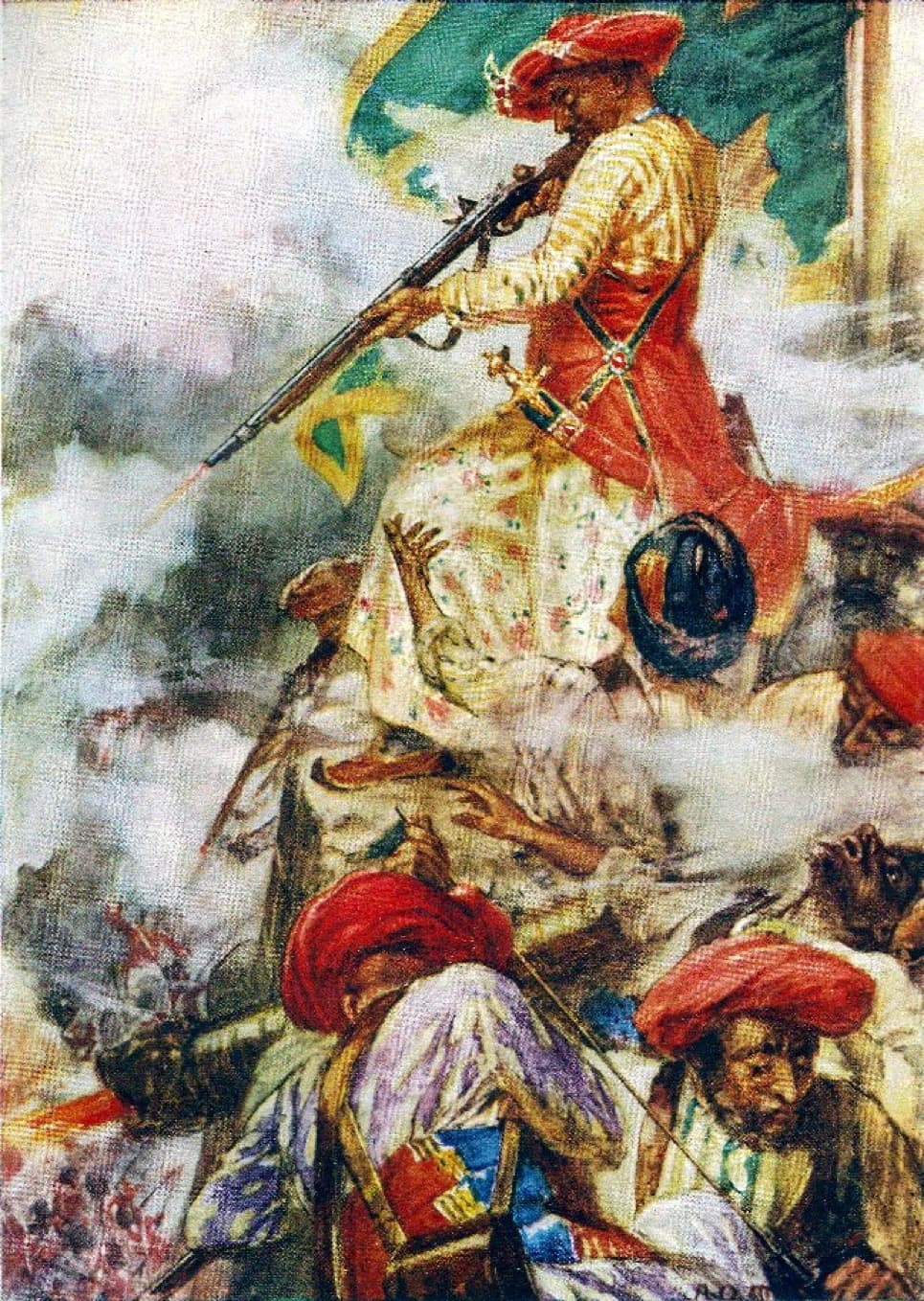
For perhaps an hour Tipu Sultan fights on the ramparts north of the breach — eyewitnesses among his servants describe him firing hunting pieces handed to him in succession, dropping several attackers. Wounded by musketry, his horse killed under him, he is carried toward the Water Gate on the north face. Urged by attendants to reveal himself and surrender, he refuses. In the crush under the gateway arch, a British soldier — never identified — grabs for his jewelled sword-belt; Tipu Sultan cuts at him; the soldier shoots him through the temple at point-blank range.
Evening
The search
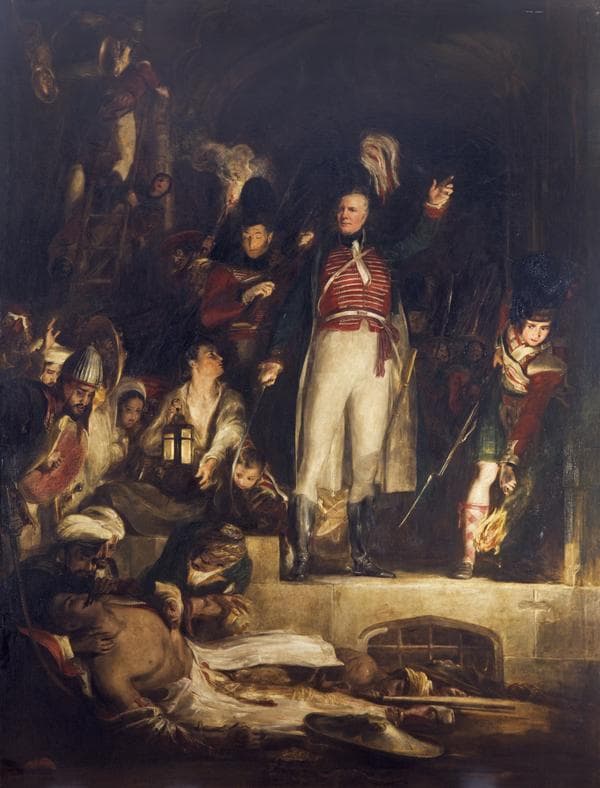
By late afternoon the fort has fallen and the palace is secured; the princes surrender, but Tipu Sultan cannot be found. Told the Sultan fell near the Water Gate, Baird goes there at dusk with torches and Tipu Sultan's servant Rajah Khan. Under heaps of dead in the archway they find him: eyes open, body still warm, three bayonet or musket wounds and the shot to the temple. The soldiers who carry him out remark that he seems alive. That night the conquering army plunders the city until order is restored the following day — by Colonel Arthur Wellesley, the future Wellington, appointed to command in Srirangapatna.
5 May
Burial at the Gumbaz
The British bury Tipu Sultan the next evening with full military honours, his bier escorted by Company grenadiers through streets lined with his silent subjects, to the Gumbaz — the mausoleum he had built for his father and mother — as a violent thunderstorm breaks over the island, so severe it kills men in the besiegers' camp. Officers present record the scene with something close to awe. The war, the dynasty, and the last army in India capable of destroying the Company are finished in a single afternoon.