Legacy & Memory · The Question
Why Is Tipu Sultan Controversial?
Because his memory became politically useful. That answer can be dated. The Republic of India put him on a postage stamp in 1974 as a 'great son of India'; national television serialised his life in 1990 to no protest; A. P. J. Abdul Kalam claimed his rockets for the space programme. No eighteenth-century document has surfaced since. What changed, in the 2010s, was the demand for a villain.
- Honoured on a stamp
- India, 1974
- National TV serial
- Doordarshan, 1990
- Controversy goes national
- 2015
- New evidence since
- None
The short answer
A historical controversy is supposed to begin with evidence — a new document, a new reading, a fact that will not fit. This one did not. The archive on Tipu Sultan has not changed in any way that would justify the change in his reputation; the scholarship, from Mohibbul Hasan's standard biography to the Irfan Habib volumes, has if anything grown more settled. What changed is that from the mid-2010s Hindu-nationalist politics in Karnataka needed a local villain, and an eighteenth-century Muslim ruler with real severities in his record was the available candidate. The controversy is genuine as a political fact. As a historical one, it is largely manufactured — and the manufacture can be watched happening, with dates.
For most of a century, a hero
The freedom-fighter reading of Tipu Sultan was the mainstream Indian position for generations, across party lines. The independence movement invoked him; the Posts & Telegraphs Department issued a commemorative stamp in July 1974 honouring, in its own words, a great son of India who fought valiantly for his independence; Bhagwan Gidwani's admiring novel was a bestseller in 1976; and in 1990 Doordarshan — the state broadcaster — ran The Sword of Tipu Sultan into millions of living rooms without national incident. Abdul Kalam, later President, cited his rockets as the ancestry of Indian aerospace. None of this was contested memory. A figure the Indian state spent four decades honouring did not become controversial because the eighteenth century changed.
The villain has a colonial pedigree
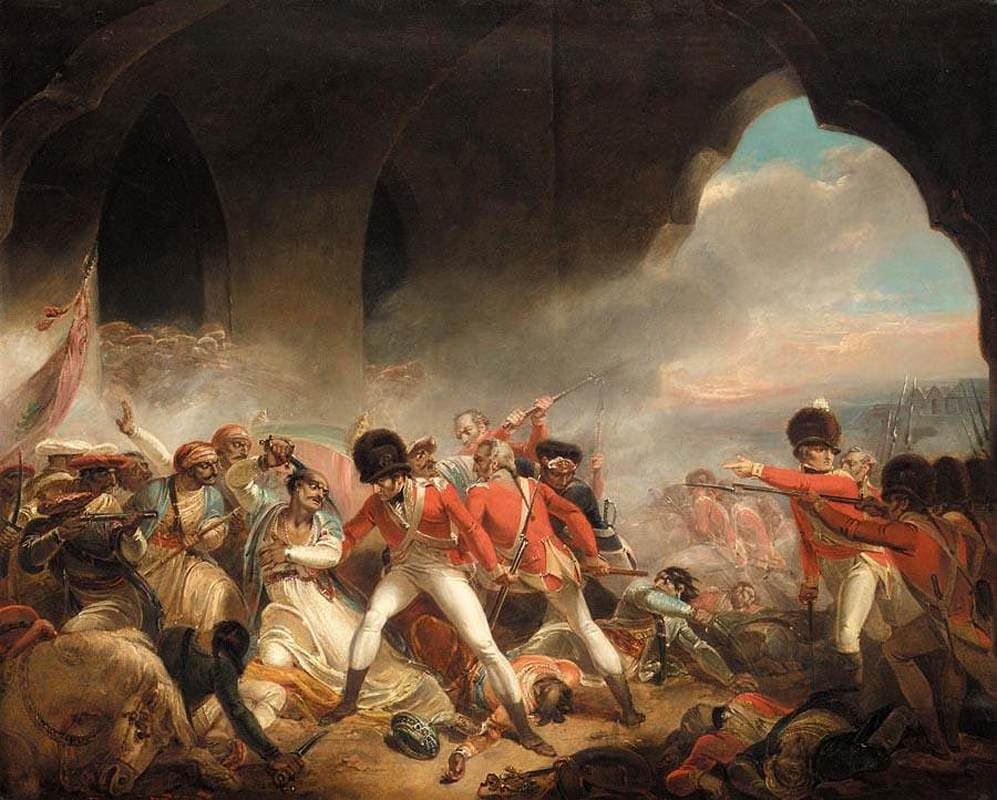
The tyrant portrait was not invented in the 2010s either. It was built in London within years of his death — by the Company's own chroniclers, Kirkpatrick, Wilks and Beatson, writing the conquest's justification: a usurping fanatic from whom Mysore had to be rescued. History paintings, panoramas and stage melodramas fixed the image for the British public. As Irfan Habib and others have pointed out, the modern communal portrait of Tipu Sultan reproduces this colonial one, usually without knowing it — the same episodes, the same framing, the same silences about everything that does not fit. The irony is complete: a narrative presented as national pride runs on the conquerors' propaganda.
The real grievances underneath
Honesty requires the next paragraph, and this site's method demands it. The political campaign did not conjure its material from nothing. The deportation of the Mangalore Christians in 1784, the mass deportations from Coorg in 1785, and the harshness of the Malabar campaigns are documented, and Kodava and Mangalorean Catholic communities carried those memories long before any modern party existed. Those memories are genuine and deserve respect. What the politics does is different: it detaches the episodes from their context — rebellion and counter-insurgency, prosecuted with equal severity against Muslim opponents — nationalises local grief, and suppresses the other half of the same archive: the temple endowments, the Sringeri letters, the Brahmin chief minister. Community memory is not the controversy. The selective weaponisation of it is.
The escalation, dated
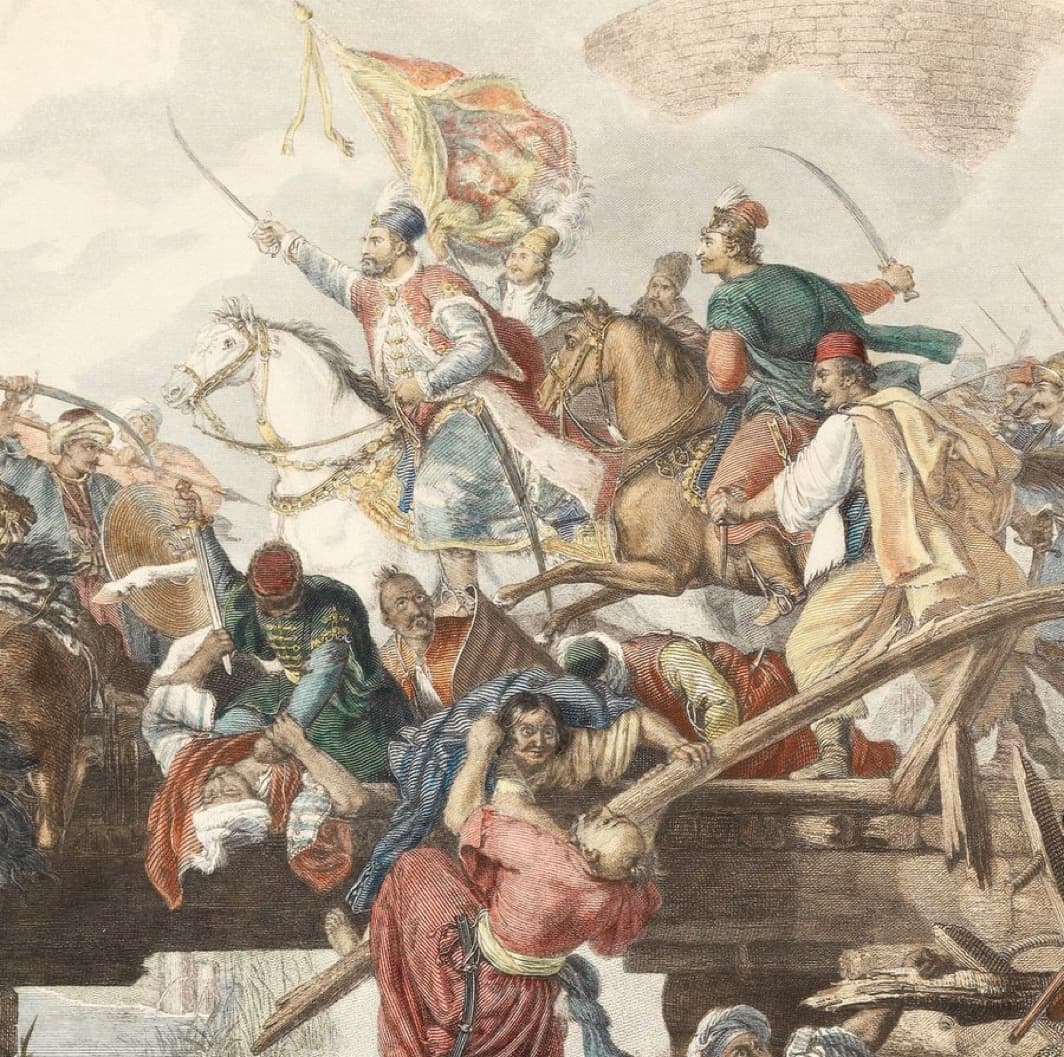
2015 — Karnataka's Congress government institutes an official Tipu Jayanti; protests in Kodagu turn deadly. The commemoration and the counter-mobilisation now feed each other annually. 2019 — a BJP government abolishes the celebration. Textbook treatments, place names and theatre productions become recurring flashpoints. 2022 — a play, Tippu Nija Kanasugalu, introduces two previously unrecorded Vokkaliga chieftains, Uri Gowda and Nanje Gowda, who are said to have killed Tipu Sultan — displacing the British from one of the best-documented deaths of the eighteenth century. Its author is the government-installed director of Rangayana, Mysuru's state theatre institute: the fiction is produced on a public stage, with public standing. 2023 — the BJP adopts the pair as election material in the run-up to the Karnataka polls. Its national general secretary C. T. Ravi insists they were “not fictional”; union minister Shobha Karandlaje declares them real. The electoral logic is not hidden: the claim offers the Vokkaliga community — the decisive vote of the Old Mysore belt — a starring role in an anti-Tipu narrative it had never held. Historians answer that the names appear in no document, no folklore and no song; the Vokkaliga community's own religious leadership objects to the invention. Days after the election is lost, the play's author resigns his state cultural post, and the characters have not been heard from since.
That episode is worth dwelling on, because it is the whole phenomenon in miniature: a fiction, commissioned into public life through a state institution, asserted as history by a ruling party's national leadership for a specific electoral purpose, and dropped the moment the election passed. It is also a caution this site takes seriously in the other direction — a memory politics that invents killers for Tipu Sultan would invent virtues for him just as readily.
Politics, not scholarship
For the specific claims most often fought over — forced conversions, temple destruction, the rocket, the betrayal — Myths vs Facts tests each against the documents, and the religious policy pages lay out the evidence at full length. For the companion question this page keeps meeting — was he a freedom fighter? — the answer is its own page.
Sources for this page
- Irfan Habib (ed.), Confronting Colonialism — introduction, on the colonial construction of the tyrant and its modern communal reuse.
- Mohibbul Hasan, History of Tipu Sultan — the base narrative, including Coorg, Malabar and the Mangalore deportations.
- Kate Brittlebank, Tiger: The Life of Tipu Sultan (2016) — on image, memory and the political afterlife.
- India Posts & Telegraphs, commemorative stamp of 15 July 1974 and its accompanying brochure text ('great son of India').
- Bhagwan Gidwani, The Sword of Tipu Sultan (1976); Doordarshan serial (1990).
- Contemporary reporting on Tipu Jayanti (2015–2019) and the Kodagu protests.
- Reporting on the Uri Gowda–Nanje Gowda claim, 2022–23: the play Tippu Nija Kanasugalu, the assertions by BJP leaders, the historians' rebuttals, and the author's resignation (The News Minute, Deccan Herald, The South First, The Quint).
- Kirkpatrick, Wilks and Beatson as primary evidence of the original colonial portrait, read adversarially per this site's method.
Full bibliography and how we weigh sources: Sources & Method