The Diplomat · Persia & Afghanistan
The Northern Gambit
If no help would come by sea, it might come overland. The plan was to make the Company fight on two fronts a thousand miles apart — and it came closer to working than the outcome suggests.
- Kabul
- Zaman Shah Durrani
- Persia
- Fath Ali Shah
- Aim
- Invasion of north India
- Last embassy
- Gulf, summer 1799
The strategic idea
The East India Company's military strength in India was formidable but finite, and it was concentrated. An Afghan army descending on the Punjab and the Gangetic plain would force Calcutta to defend Bengal and Awadh — the richest and least defensible part of its empire — and could not be answered at the same time as a war in the Deccan. Tipu Sultan grasped this and worked at it for years. So, for that matter, did the British, whose alarm at Zaman Shah is written all over their correspondence of the 1790s.
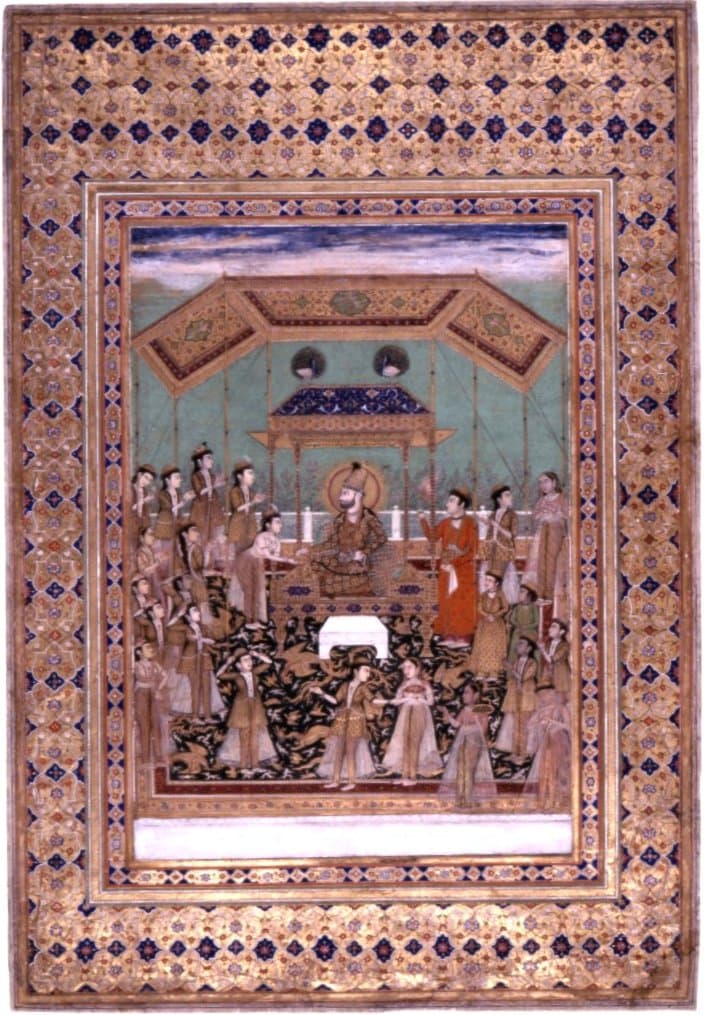
Zaman Shah of Kabul
Zaman Shah Durrani, grandson of Ahmad Shah Abdali, took power in Afghanistan in 1793 with an inherited claim to northern India and a family history of doing something about it. Tipu Sultan pressed him repeatedly to march, arguing that the moment was favourable and the cause common. Zaman Shah answered in kind — that he would soon march with his conquering army so that the inhabitants of those regions might be restored to comfort and ease — and he was not merely posturing: he entered the Punjab and occupied Lahore more than once in the later 1790s.
He never came further. Each advance was cut short by trouble on his western frontier, where Persia threatened Herat whenever Kabul committed itself eastward. British diplomacy understood the mechanism exactly and worked to keep it running: encouraging Tehran to press Herat was cheaper than fighting an Afghan army on the Jumna. Zaman Shah was overthrown and blinded in 1800.
Persia
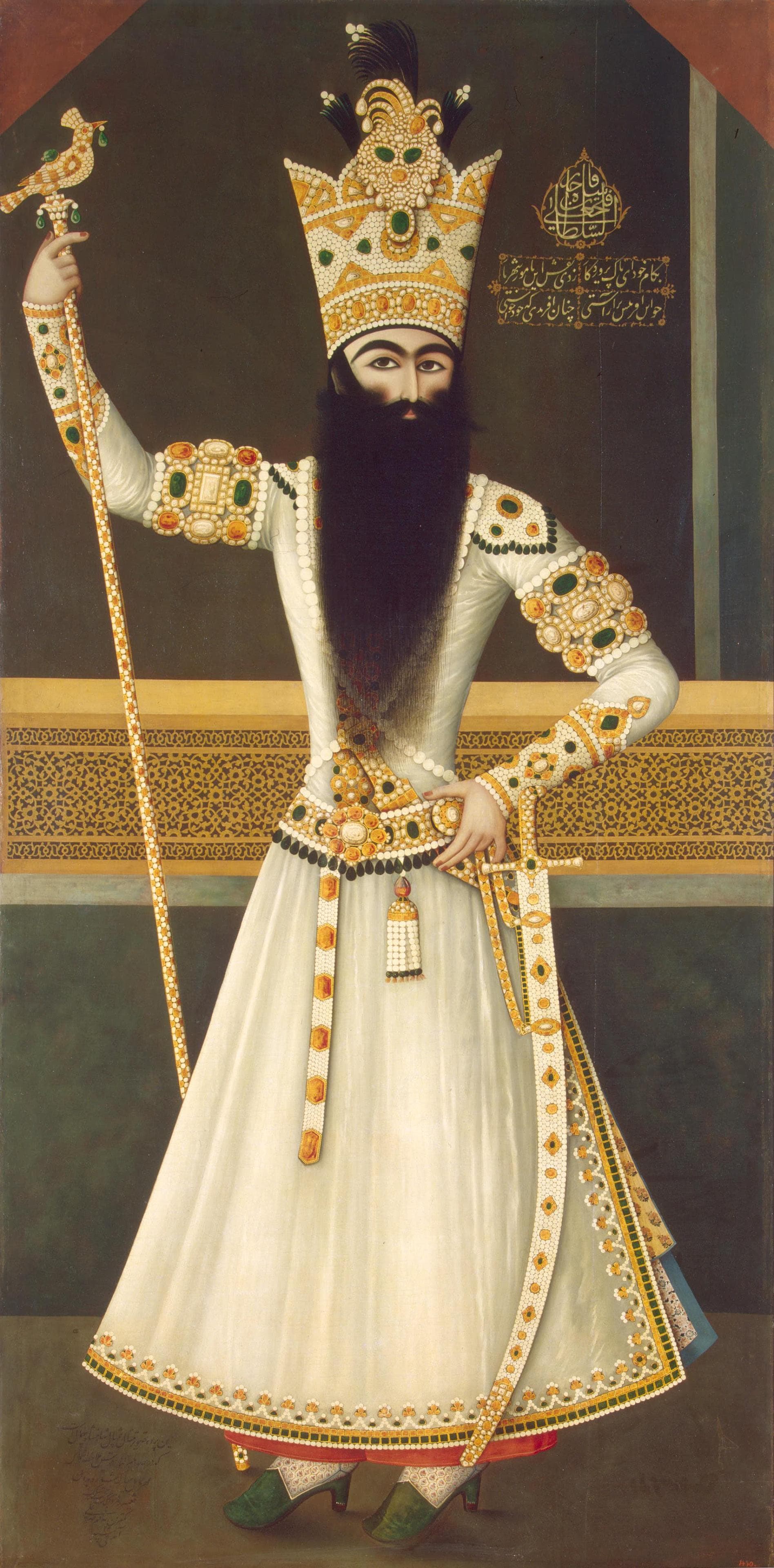
Persia was courted for the same reason and with the same hope of a Muslim bloc running from Mysore to the Caspian. Under Fath Ali Shah, who came to the throne in 1797, the Qajar state was rebuilding but militarily weaker than Afghanistan and preoccupied with Russia in the Caucasus. It was also, from the British point of view, the perfect instrument for containing Kabul — which is what it became.
Tipu Sultan's missions to Persia carried the usual mix: an alliance proposal, trade privileges, and lavish gifts. The last of them is the most affecting document in his entire diplomatic record. His final embassy to the Shah, bringing three elephants and costly presents, reached the Gulf in the summer of 1799 — after Srirangapatna had fallen, after Tipu Sultan was dead, and after the state the envoys represented had been partitioned between the Company, the Nizam, and a restored Wodeyar raja. They were ambassadors of a country that no longer existed.
Why it failed
Distance and dependency. An overland coalition needed Kabul, Tehran, and Srirangapatna to act in concert across thousands of miles with months of message-lag, while each faced its own immediate threat. Wellesley's achievement in 1798–99 was to make sure none of them moved at the same time — isolating Mysore diplomatically before isolating it militarily. The plan was not foolish; it was simply beyond the communications and the trust available to it.
Sources for this page
- Mohibbul Hasan, History of Tipu Sultan — chapters on relations with Kabul and Persia.
- Irfan Habib (ed.), State and Diplomacy under Tipu Sultan (2001).
- Major Dirom, A Narrative of the Campaign in India (1794) — quoting Zaman Shah's reply.
- B. Muddachari, 'Diplomacy of Tipu Sultan' (1989).
Full bibliography and how we weigh sources: Sources & Method