c. 1721
Born at Budikote
Into a family of minor military service — his father a naik, a petty commander of foot. When his father died the family fell into real poverty, and his widowed mother took her sons to Mysore to seek help from a kinsman.
The Person · His Father
A soldier's son who was orphaned into poverty, enlisted as a trooper, and ended as the ruler of one of the strongest states in India — without ever claiming its throne. Everything Tipu Sultan inherited, Haidar Ali built.
Haidar Ali is the most complete self-made career in eighteenth-century India. He inherited no principality, no revenue, and no claim. What he had was military competence in a period when southern India was rearranging itself by force, and a clear understanding — earlier than almost anyone else — that the Europeans fighting each other in the Carnatic had brought a way of making war that could be learned.
c. 1721
Into a family of minor military service — his father a naik, a petty commander of foot. When his father died the family fell into real poverty, and his widowed mother took her sons to Mysore to seek help from a kinsman.
1740s
He and his elder brother Shahbaz took service and rose on ability rather than birth. Tradition holds that he first caught the eye of Nanjaraj, the kingdom's effective ruler, at a shooting competition at Devanahalli — the town where his son would be born.
c. 1750s
Given 50 horse and 200 foot of his own. He learned his profession on campaign, notably in the long fighting around Tiruchirappalli, where French and British contingents were already deciding southern Indian wars.
1755
Appointed military governor of Dindigul, and there did the thing that separates him from every other successful soldier of the period: he set up an arsenal, staffed with French artificers brought from Pondicherry. A provincial governor began manufacturing his own munitions to European standards.
1761
He displaced Nanjaraj and took control of the state as Sarvadhikari — chief minister and de facto ruler — governing in the name of the Wodeyar raja, whose throne he never formally took.
1761–1763
Dod Ballapur, Sera, Hoskote, and above all Bednur, whose treasury and coastal access turned effective control into unchallengeable power. Sunda, Canara and Malabar followed, along with the systematic suppression of the poligars.
1782
Died of illness on 7 December 1782, in the middle of the Second Anglo-Mysore War, with his son commanding hundreds of miles away on the Malabar coast.
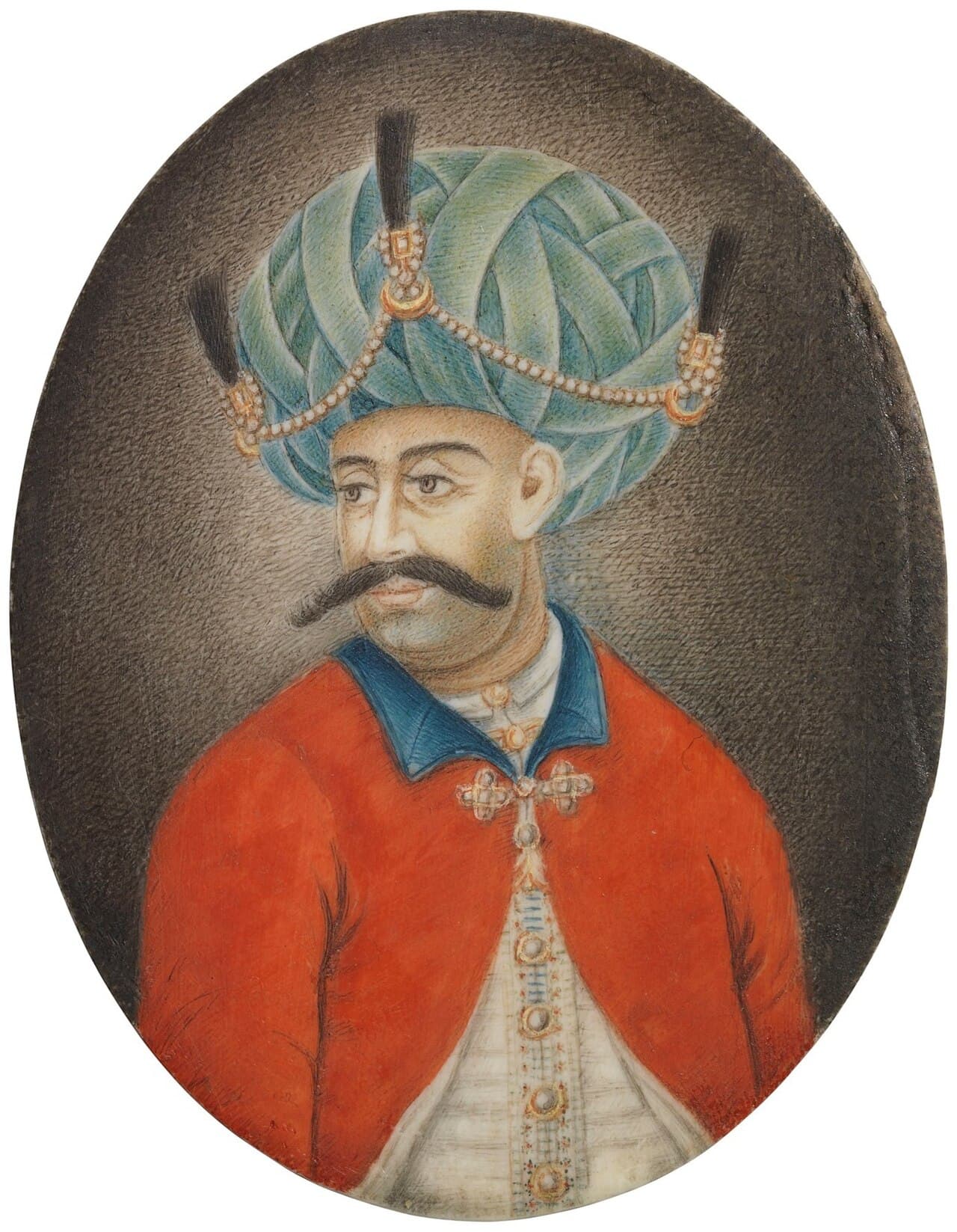
The arsenal at Dindigul is the key to the whole story. In the 1750s most Indian commanders bought European weapons and hired European gunners; Haidar Ali set about making the weapons, and hiring the men who knew how, so that the capability stayed in Mysore when the foreigners went home. That single decision is the seed of everything the state later became — the foundries, the rocket manufactories, the state factories, the shipyards.
He applied the same logic to men. He raised regular infantry drilled on the European model and paid in cash, alongside the light cavalry that was Mysore's traditional strength — the combination his son would inherit and formalise in the Fathul Mujahidin. He suppressed the poligars, brought revenue under central control, and treated the treasury as the thing that made armies possible. In Malabar he went further, and is recorded inverting the province's caste hierarchy outright to break the Nair militia that would not stop fighting him — an episode taken on its own terms in Caste in Malabar.
Haidar Ali fought the East India Company twice and was never beaten by it. In the First Anglo-Mysore War he broke the coalition ranged against him by diplomacy, lost two set-piece battles, and then rode round the Company's armies to appear outside Madras and dictate the Treaty of Madras in 1769. The Company's subsequent refusal to honour that treaty's mutual-defence clause, when the Marathas invaded Mysore in 1771, shaped the rest of his life and his son's.
He opened the Second Anglo-Mysore War in 1780 by sweeping into the Carnatic, and it was under his command that the Company suffered its worst defeat in India to that date, at Pollilur — the field where his son commanded the enveloping attack. He did not live to see the peace: he died in camp in December 1782, and the war went on without him.
Haidar Ali was unlettered, and made certain his son would not be. Tipu Sultan was taught Persian, Islamic law, and the business of administration, and was put on campaign as a teenager — classroom and camp together. The father built a state and ruled it from behind the Wodeyar throne; the son took the title of sultan, dropped the Mughal emperor's name from the coinage, and sought recognition from the Ottoman caliph instead.
The differences are real, but the continuity matters more. The army, the arsenal, the revenue system, the French connection, the war with the Company, and the grievance of 1771 were all Haidar Ali's before they were Tipu Sultan's. When historians argue about whether Mysore's modernisation was a break with the past, this is the man the argument is really about: it is hard to call the son a revolutionary when the father had already done so much of it.
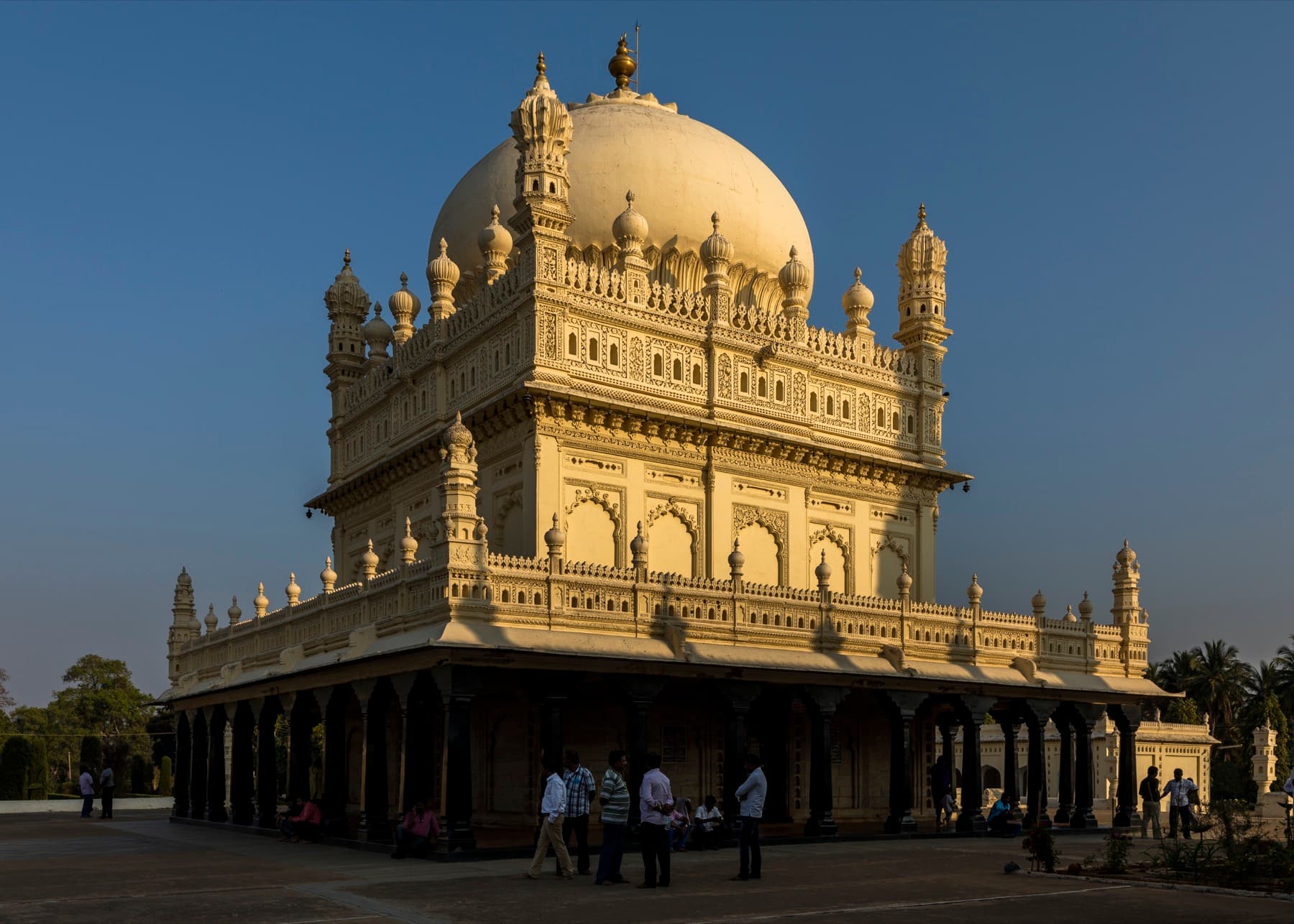
He was buried at Srirangapatna in the Gumbaz, the domed mausoleum his son built for him in an orchard south-east of the fort. Seventeen years later the British buried Tipu Sultan beside him, in the tomb he had built for his parents.
Sources for this page
Full bibliography and how we weigh sources: Sources & Method