The Wars · 1790–1792
The Third Anglo-Mysore War
The war that broke Mysore without ending it. Tipu Sultan gave the Company its pretext, the Company gave itself allies, and two years later half his kingdom was gone and two of his sons were hostages in a British camp.
- Years
- 1790 – 1792
- British commander
- Lord Cornwallis
- Coalition
- Company, Nizam, Marathas
- Cost
- Half of Mysore
Origins — Travancore
On 29 December 1789 Tipu Sultan attacked the Travancore Lines, the fortified barrier the Raja of Travancore had built across the approaches to his territory. Tipu Sultan had a case — Travancore had bought two forts in Cochin that he claimed as his vassal's, and had sheltered Malabar chiefs in rebellion against him — but Travancore was an ally of the Company, and the attack was an act of war under the treaty system.
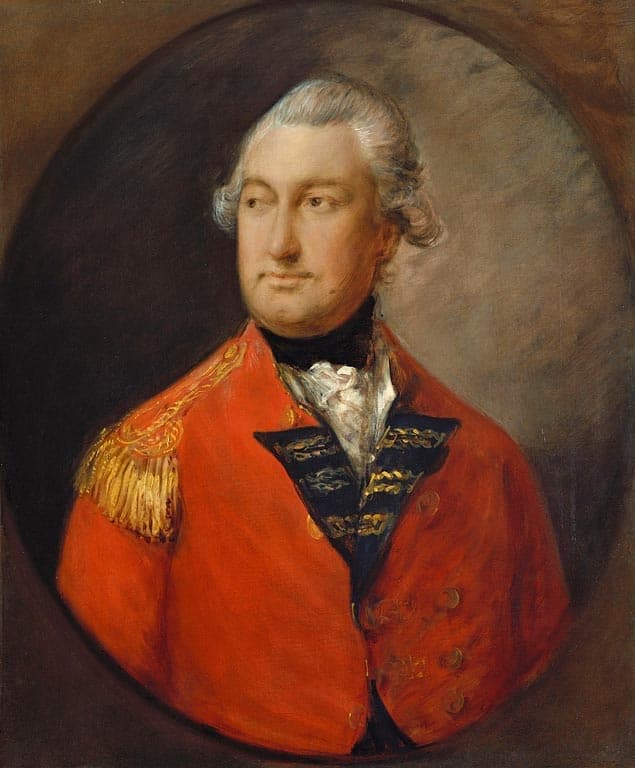
Cornwallis declared hostilities on 27 January 1790. He had wanted this war and had prepared the ground: within months he had bound the Nizam of Hyderabad and the Marathas into a triple alliance against Mysore. It was the single greatest strategic error of Tipu Sultan's reign — not because the grievance was invented, but because he handed the one man capable of assembling a coalition the excuse to assemble it.
1790 — a wasted year
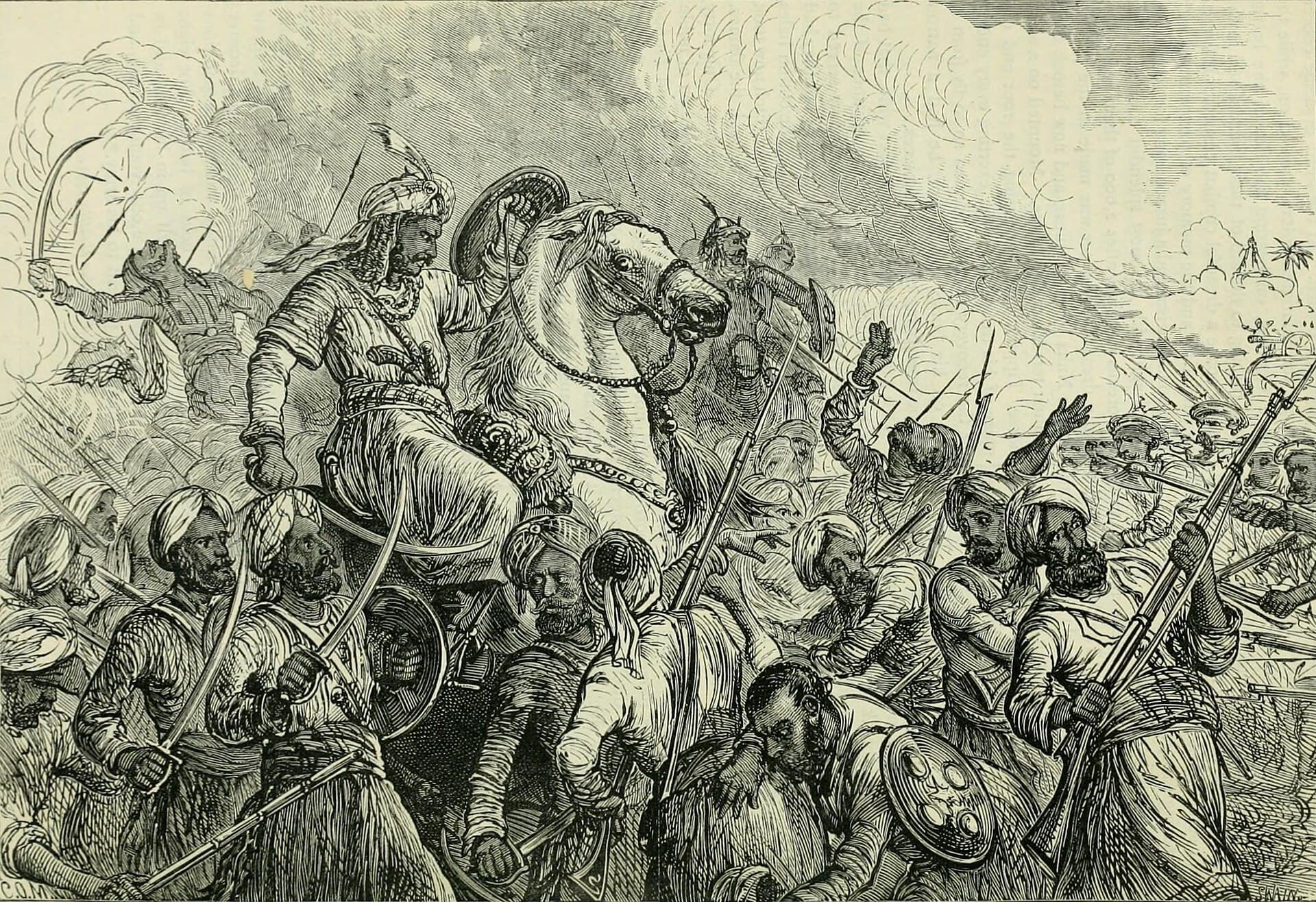
The first campaign, under General William Medows, achieved almost nothing. Tipu Sultan fought the war he knew: refusing battle, stripping the country ahead of the invaders, and using cavalry against convoys and detachments. He even carried the war into the Carnatic in his father's style. By December, Cornwallis had lost patience and took command in the field himself.
1791 — Bangalore, and a failed thrust
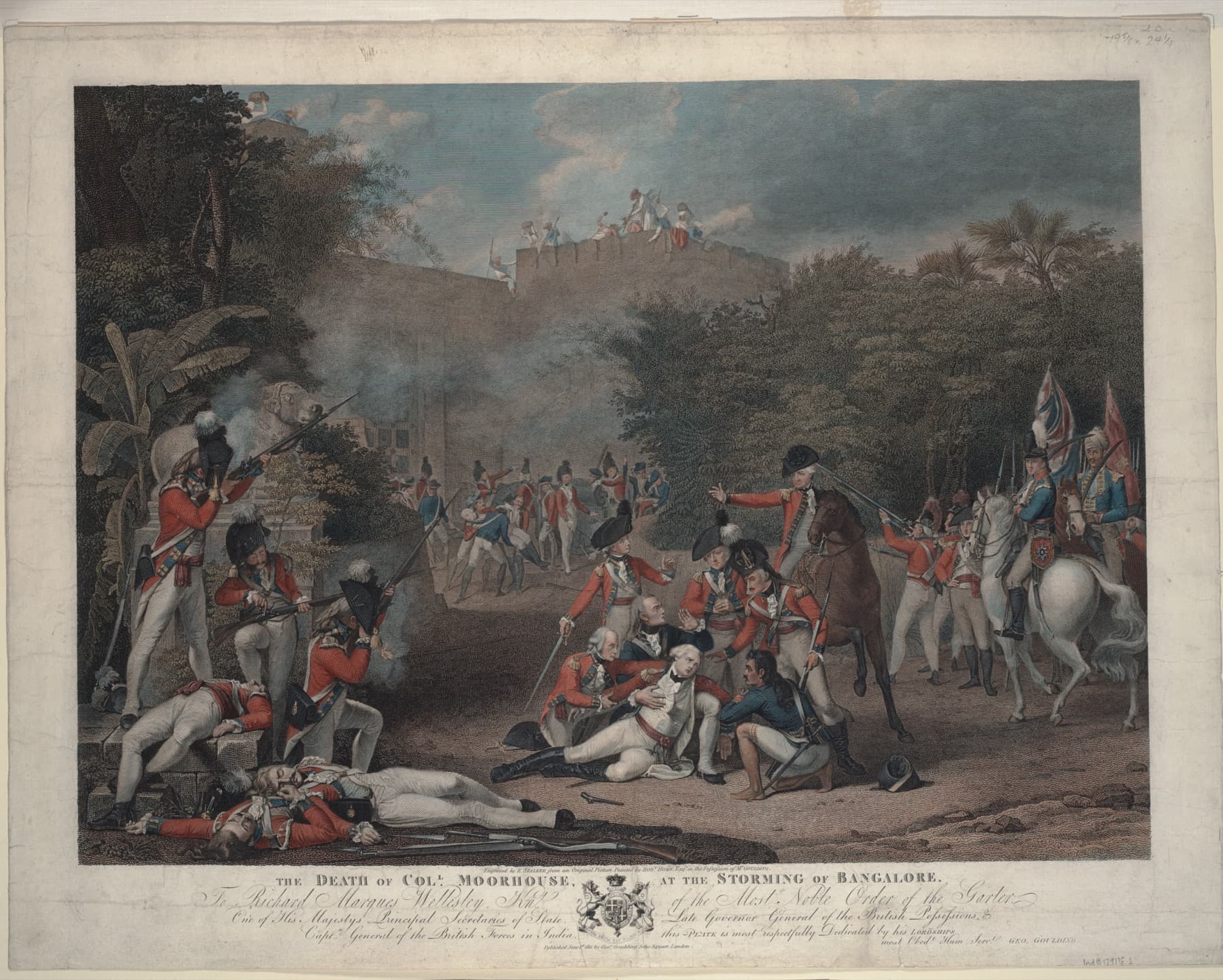
Cornwallis changed the method: rather than chase Mysorean cavalry, he would take the fortresses and force Tipu Sultan to defend fixed places. In March 1791 he stormed Bangalore — the assault on the Pettah gate cost the life of Colonel Moorhouse and became one of the best-known British battle paintings of the period.
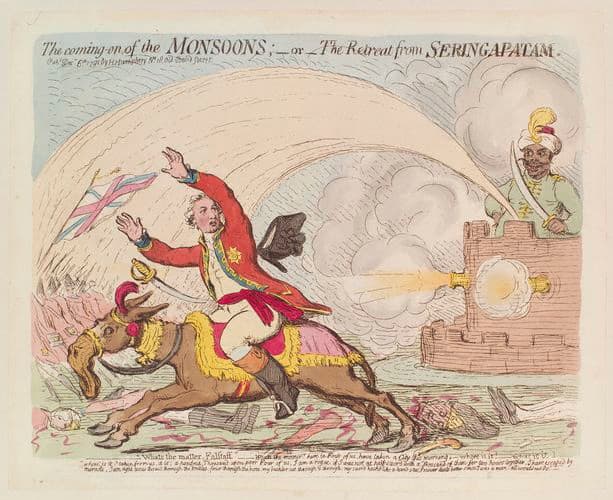
He then drove for the capital and fought Tipu Sultan outside it at Arakere on 15 May 1791. He won the field and lost the campaign: his draught cattle were dead or dying, his supplies exhausted, monsoon rains closing in. Cornwallis destroyed his own siege guns and retreated — the third British army in twenty-five years to be defeated by Mysore's logistics rather than its soldiers.
The hill forts, and the second advance
The difference this time was that Cornwallis could afford to fail once. Maratha and Hyderabad contingents kept Mysorean forces dispersed and supply lines fed; over the second half of 1791 he methodically reduced the fortresses that had made the retreat necessary — Nandidurg in October, and the great rock of Savandurga, thought impregnable, stormed on 22 December after twenty days.
In February 1792 he advanced again on Srirangapatna, this time with siege train, supplies, and allies intact, and forced the outer defences. Tipu Sultan, with the coalition camped before his capital and no relief possible, opened negotiations.
The Treaty of Seringapatam, 18 March 1792
The terms were severe:
Territory. Roughly half of Mysore was ceded and divided among the victors — Malabar, Coorg, Dindigul, and the Baramahal to the Company; the country around the Tungabhadra to the Marathas; the lands from the Krishna toward the Pennar to the Nizam. The Company's share gave it the western coast and the passes into Mysore.
Indemnity. Three crore and thirty lakh rupees, payable in instalments.
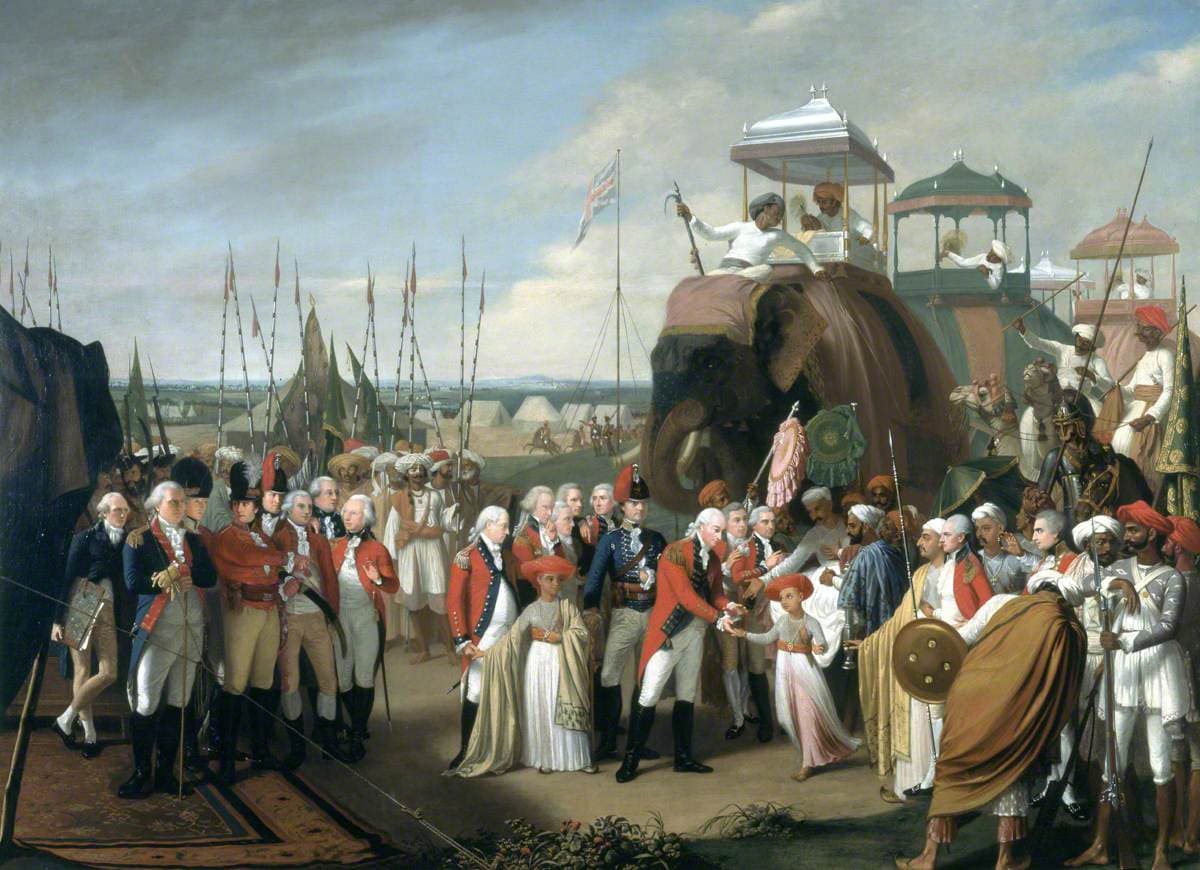
Hostages. Two of Tipu Sultan's young sons, Abdul Khaliq and Muiz-ud-din, were handed to Cornwallis as security for payment. The scene — small boys delivered to a British general — was painted repeatedly and became one of the most reproduced images of the empire, a piece of visual propaganda about paternal conquest that circulated for decades. The princes were returned in 1794 when the indemnity was paid. The hostage episode in full.
Significance
Mysore survived, and Tipu Sultan spent the next seven years doing what his state was built to do: rebuilding revenue, re-arming, laying down a navy, and searching the world for allies. But the strategic position was now hopeless. He had lost half his revenue base, his access to the western sea, and the hill forts that screened his capital — and he was surrounded by three powers with a shared interest in his defeat.
Sources for this page
- Mohibbul Hasan, History of Tipu Sultan — chapters on the Third War and the treaty.
- Treaty of Seringapatam (1792), in Aitchison's Treaties, Engagements and Sanads.
- Major Dirom, A Narrative of the Campaign in India, which Terminated the War with Tipoo Sultan in 1792 (1794) — British campaign account.
- Irfan Habib (ed.), Confronting Colonialism (2002).
- C. Hayavadana Rao, History of Mysore 1766–1799 (1946).
Full bibliography and how we weigh sources: Sources & Method