The Diplomat · France
France
The alliance Tipu Sultan wanted most, pursued through a monarchy, a revolution, and a general in Egypt. It never produced an army — only, in the end, the paperwork the British used to justify destroying him.
- At Versailles
- August 1788
- Ambassadors
- Three, with suite
- Volunteers, 1798
- c. 100 men
- Napoleon's letter
- 1799, intercepted
The logic of the French bet
France was the one European power with a fleet, an Indian foothold, and the same enemy. French officers had trained Haidar Ali's infantry; French gunners had served Mysore's artillery; French engineers had advised on its forts. If a European ally was going to break the Company's command of the sea and its command of money, it would be France. Everything else in Tipu Sultan's foreign policy — the Ottomans, Kabul, the Gulf — was in some measure insurance against this bet failing.
Versailles, 1788
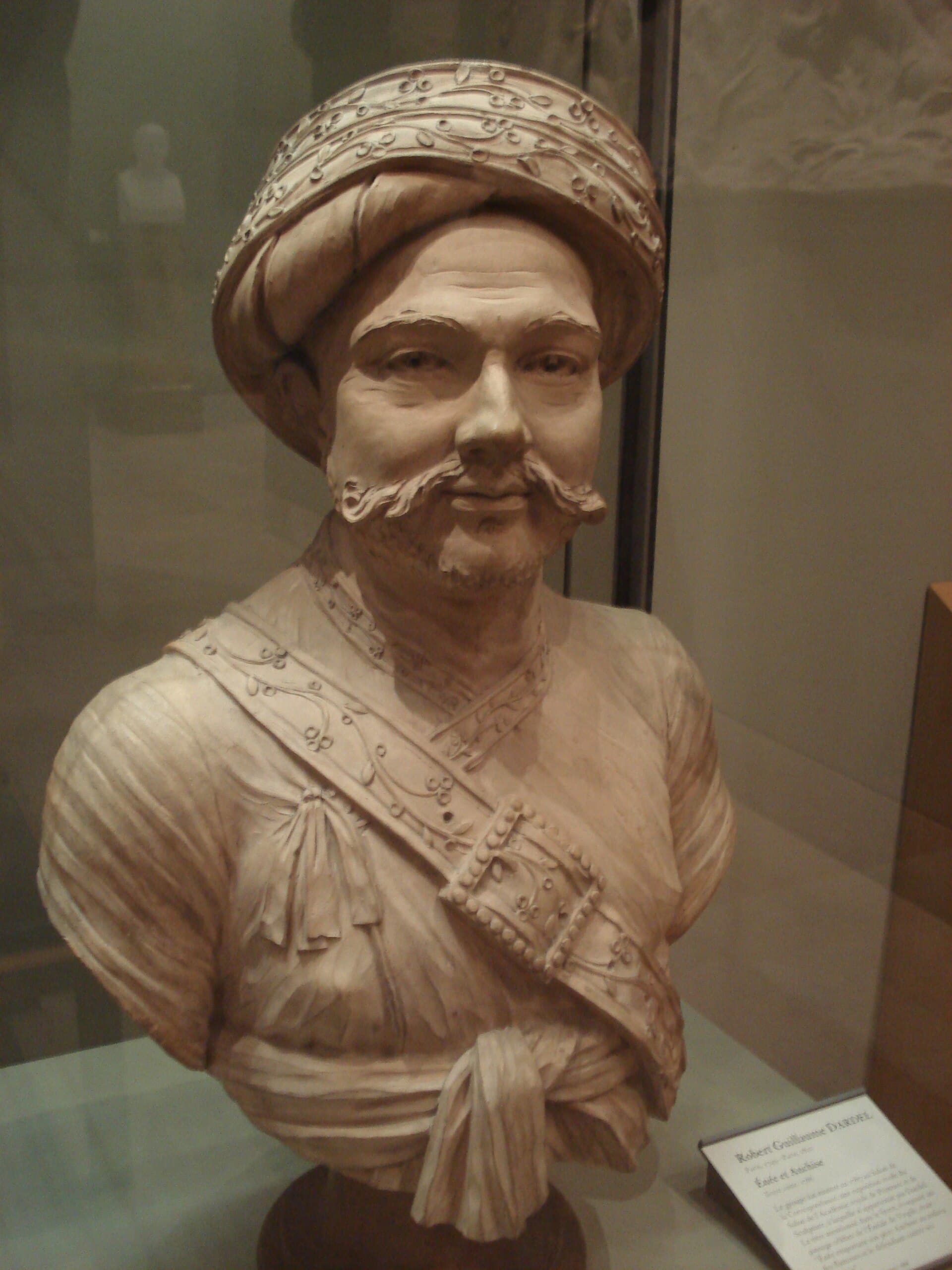
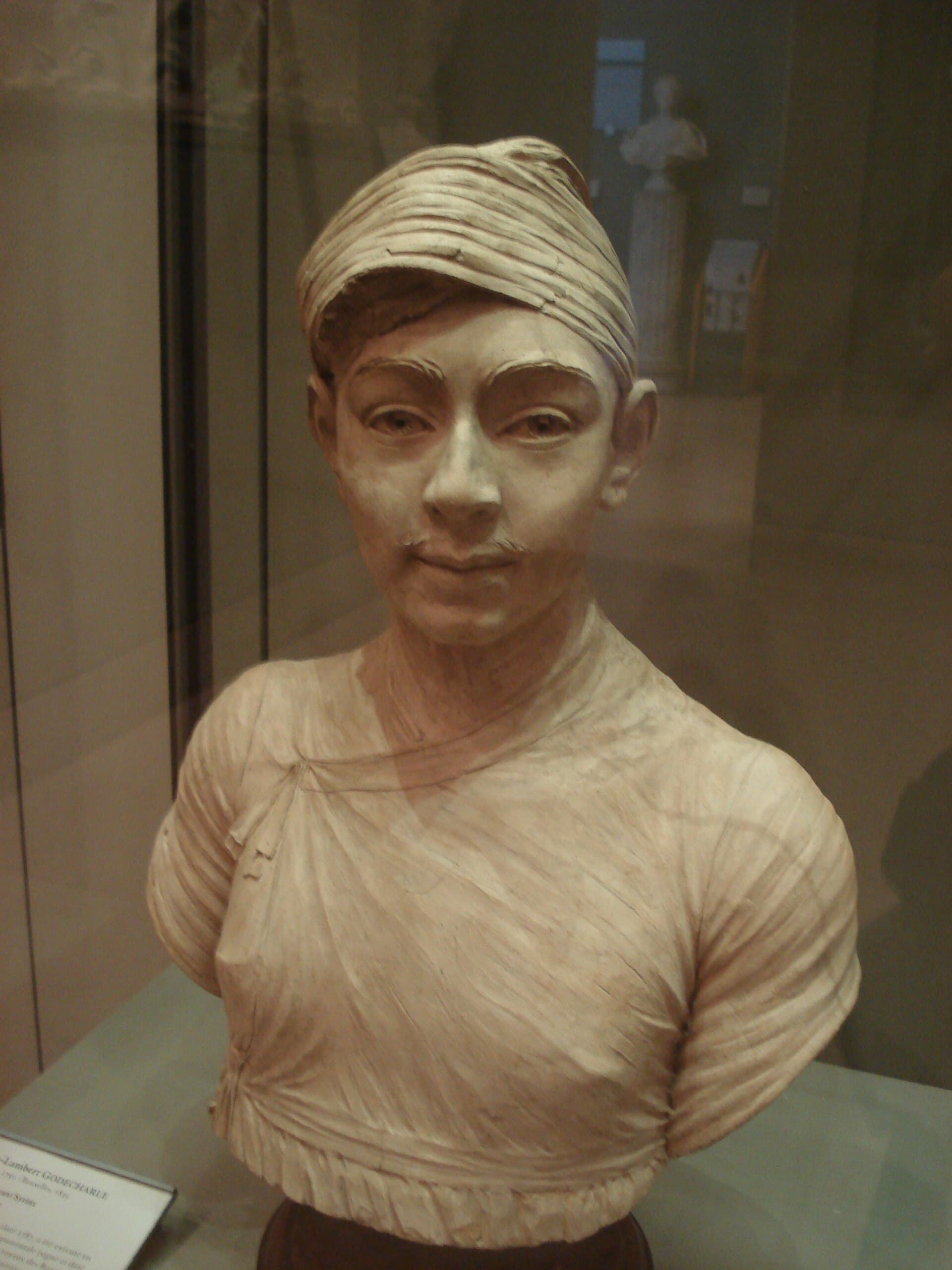
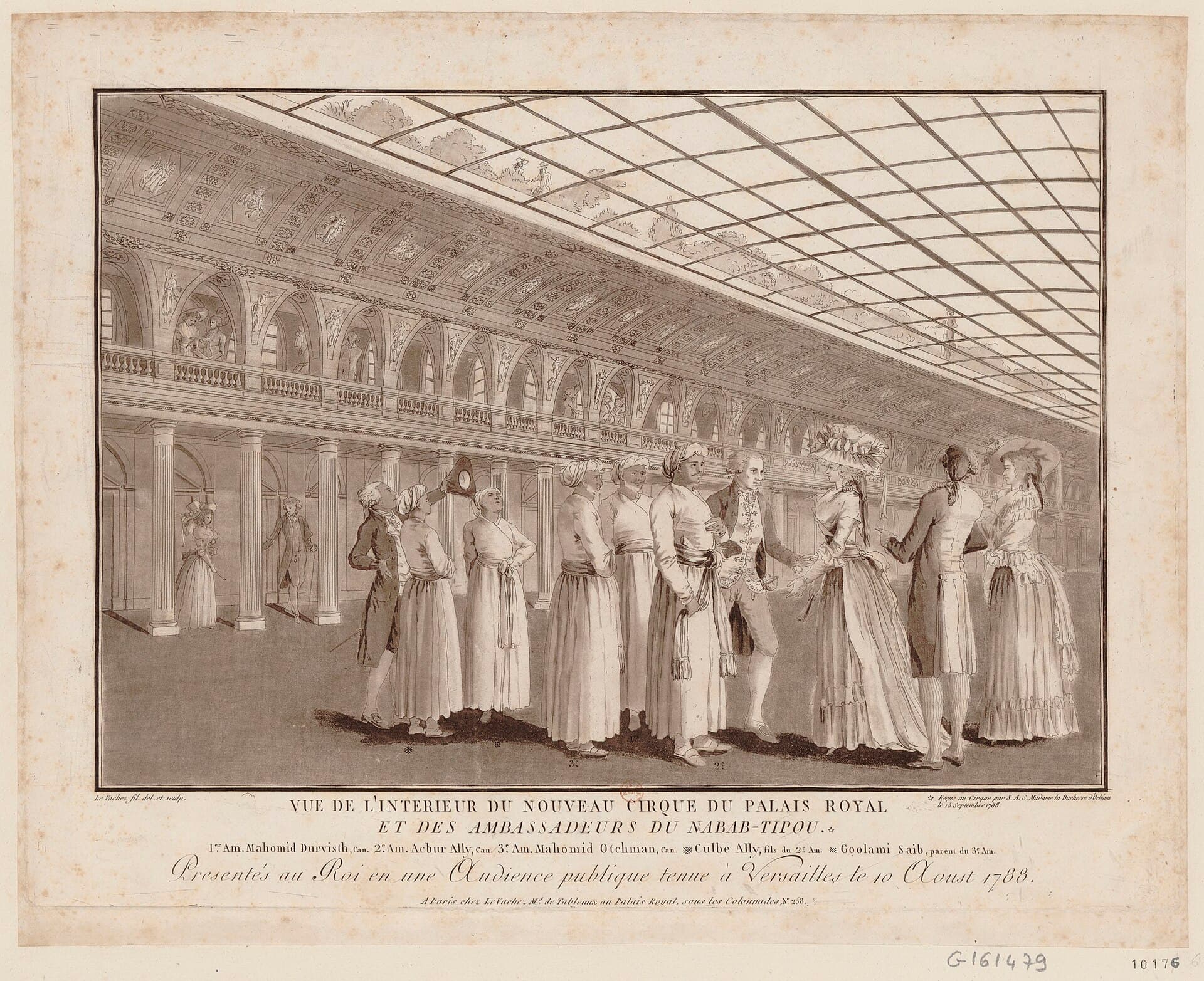
The embassy left Mysore in 1787: Mohammad Darvesh Khan, Akbar Ali Khan, and Mohammad Osman Khan, with a substantial suite. They were received by Louis XVI in public audience at Versailles on 10 August 1788, and became a sensation — painted, engraved, described in the press, their dress and manners the talk of a court that had months of ordinary life left.
Their brief, which survives, was specific: a formal offensive and defensive alliance, and French troops — Tipu Sultan had asked at one point for a force of ten thousand under his own authority. What they received was ceremony, gifts, and commercial assurances. The French treasury was empty and the state months from collapse; the ministry would not commit to a war in Asia. The ambassadors came home with honour and nothing else.
Revolution and the Jacobin club
The fall of the monarchy did not deter him — he simply changed counterparties, writing to the republican authorities and to the governor of the Isle de France (Mauritius). In 1797 the French adventurer François Ripaud arrived at Srirangapatna, and from his visit comes the most colourful episode in the whole story: a Jacobin club founded in the capital, a liberty tree planted inside the fort, and the Sultan hailed as Citoyen Tipou — Citizen Tipu.
The Malartic Proclamation, 1798
This was the catastrophe. Tipu Sultan's envoys reached Mauritius asking for troops. The governor, Anne Joseph Hippolyte de Malartic, having few to spare, published a public proclamation calling for volunteers to join an offensive and defensive alliance with the Sultan of Mysore against the English.
A secret request for military aid had been printed as a recruitment advertisement. Copies reached Calcutta within months. Roughly a hundred volunteers actually sailed for Mangalore — militarily irrelevant. Diplomatically it was decisive: Governor-General Wellesley now possessed, in print and over a French governor's signature, proof that Tipu Sultan was seeking a French army to expel the British from India.
Napoleon
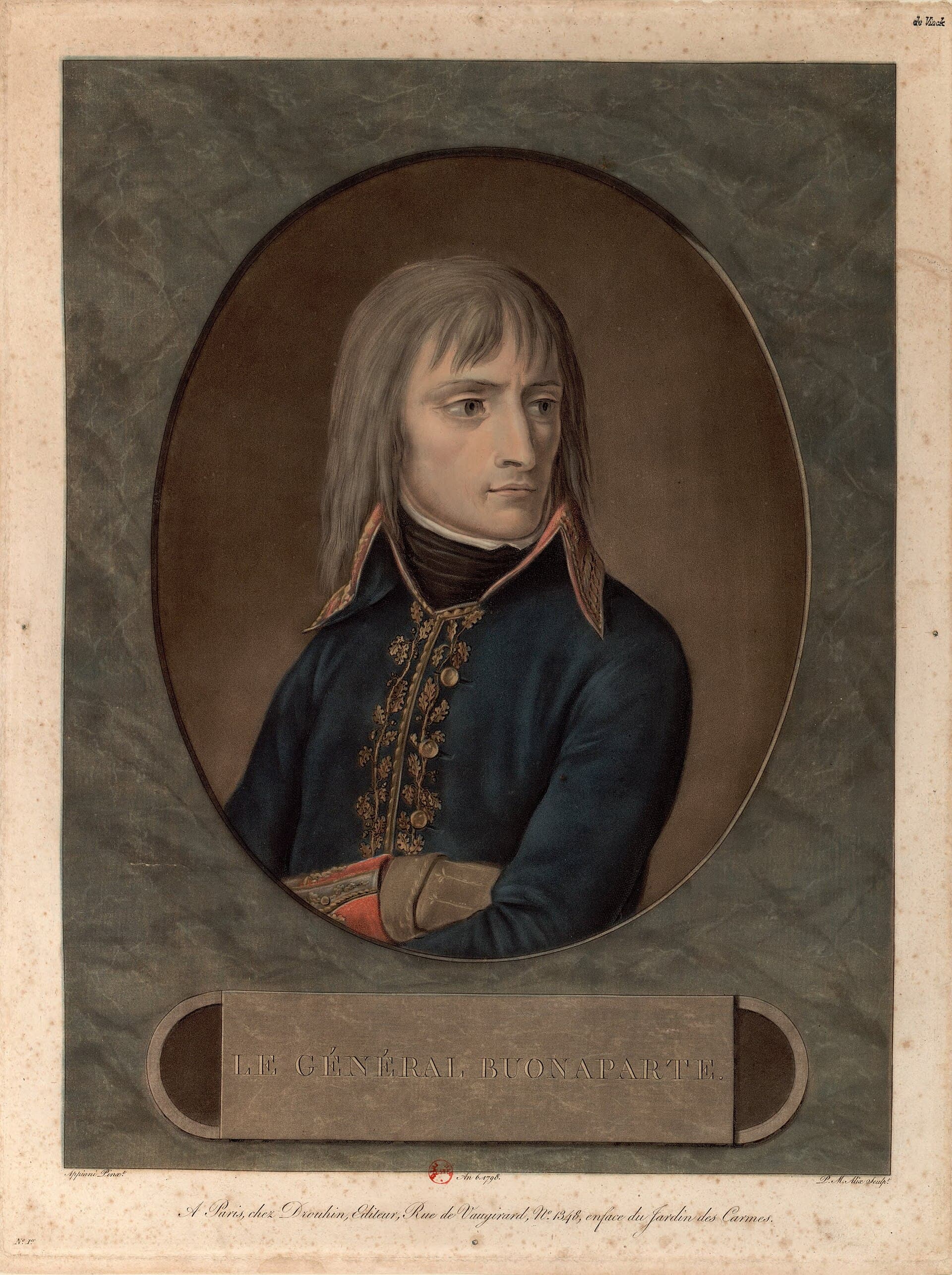
In July 1798 Bonaparte landed in Egypt, and for a few months the two projects appeared to be converging on the same map. Napoleon wrote to Tipu Sultan: he had arrived on the shores of the Red Sea with an innumerable and invincible army, and wished to deliver him from the iron yoke of England. The letter was sent onward through the Sharif of Mecca — and intercepted by the British at Mocha, translated, and forwarded to the Governor of Bombay.
Napoleon never came. Nelson had destroyed the French fleet at the Nile within weeks of the landing, stranding the army in Egypt. But the letter did its work anyway. Together with the Malartic Proclamation it formed the documentary core of Wellesley's case for a pre-emptive war, and more of Tipu Sultan's French correspondence was found among his papers at Srirangapatna after his death — published promptly, to justify what had already been done.
The verdict
French historians of the period tend to a blunt judgement: France used Mysore as a diversion to occupy British naval attention in the Indian Ocean, and was never seriously prepared to fight for it. The French remained a European power with European priorities. Tipu Sultan, for his part, ignored repeated French advice to make peace with the Marathas and the Nizam at any price — the one thing that might have changed the outcome. Each side wanted the other to solve a problem it would not solve for itself.
Sources for this page
- Irfan Habib (ed.), State and Diplomacy under Tipu Sultan (2001) — the brief for the embassy to France, 1785–86.
- Mohibbul Hasan, History of Tipu Sultan — chapters on the French connection and the last war.
- The Malartic Proclamation (Isle de France, 1798) — text reproduced in the British case for war.
- Napoleon's letter to Tipu Sultan (1799), intercepted at Mocha; British translation forwarded to the Governor of Bombay.
- Official Documents Relative to the Negotiations Carried on by Tippoo Sultaun with the French Nation (Calcutta, 1799) — the published British case, read critically.
Full bibliography and how we weigh sources: Sources & Method