The Sultan · The Record
The Achievements of Tipu Sultan
Lists of his achievements circulate freely, and most of them inflate. This one is built the other way: only what the documents support, each entry linked to the page where the evidence is laid out — and with the best witness for the whole record being a hostile one, the surveyor his conquerors sent.
- Rockets
- First iron-cased system
- Trading houses
- Some thirty, Muscat to Pegu
- Sericulture
- Introduced, 1780s
- The hostile witness
- Buchanan's survey, 1800
1. The iron-cased rocket
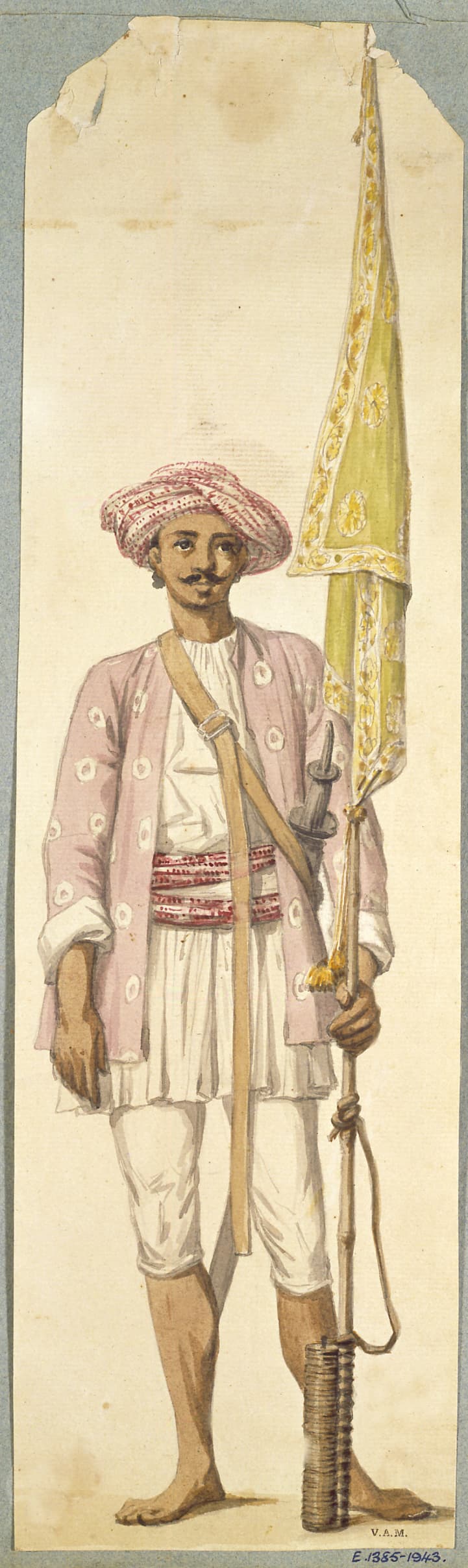
Not the invention of the rocket — that claim is a myth, and treated as one here — but something more consequential: the first effective military rocket system. Under Nawab Haidar Ali Khan and then Tipu Sultan, Mysore cased its rockets in hammered iron, which raised range and lethality beyond anything flying elsewhere; manufactured them in dedicated towns; and organised rocketmen as a standing branch of the army with written doctrine down to the launch angle. Captured examples went to Woolwich and seeded Britain's Congreve rocket — which is how a Mysorean weapon ended up over Fort McHenry in the American anthem.
2. The land settlement
The quiet achievement under everything else. Tipu Sultan abolished the jagirs and pushed out the hereditary poligars and revenue intermediaries who each took a cut between the cultivator and the state, assessed the land directly from the cultivator at published rates, advanced taccavi loans of cattle, seed and grain, and funded irrigation works — with incentives to bring waste land under the plough. The revenue pages set out the machinery. The measure of it is who kept it: the Company's own administrators preserved the system's bones in the ryotwari settlement that followed.
3. A salaried state under written rules
The Sarkar-i-Khudadad ran on six central departments, 37 provinces and 124 taluks, staffed by officials paid in cash from the treasury rather than in land — which is what made them removable — under written regulations, with revenue collection deliberately separated from policing. The administration page has the full machinery. For the eighteenth century, a bureaucracy of salaried, auditable officials was itself an achievement; most contemporaries governed through exactly the intermediaries he abolished.
4. The economic state
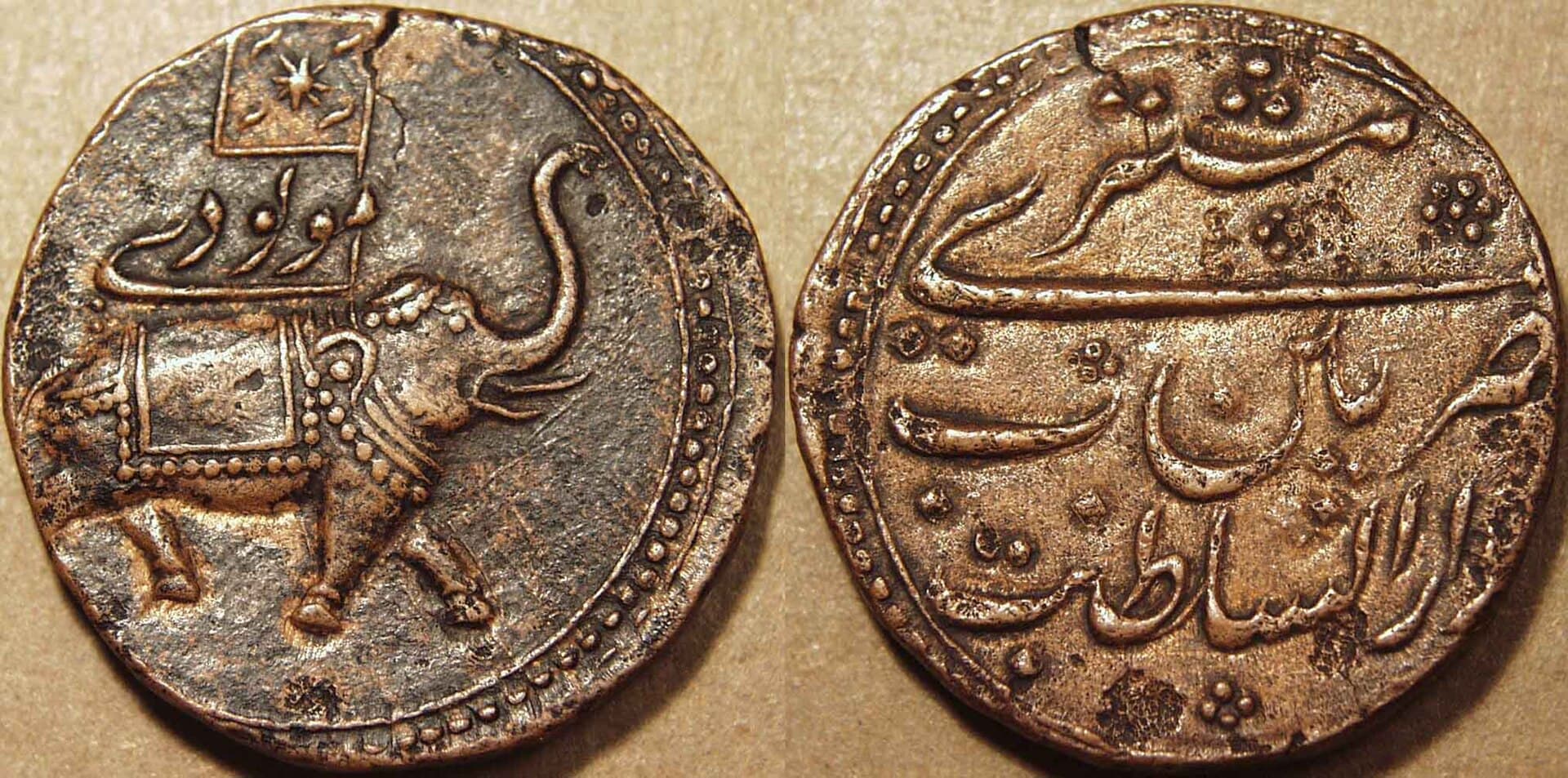
State monopolies in sandalwood, pepper and cardamom; some thirty trading houses at home and overseas, from Muscat eastward; a treasury that took deposits and paid returns — a state bank in embryo. And money that announced a new order: his own coinage, named for saints and stars, dated in the Mauludi calendar his state invented. Every coin in circulation restated the claim of sovereignty.
5. Industries that outlived the state
The clearest test of an economic achievement is whether it survives its founder. Two of Tipu Sultan's did, by centuries. He introduced sericulture to Mysore in the 1780s, importing stock and expertise and establishing twenty-one rearing centres — the origin of the Mysore silk industry that still carries the name. And the Persian lacquerware technique he settled at Channapatna — turned wood, vegetable dye, shellac burnished on the lathe — is still the technique used in the town India calls Gombegala Ooru, the town of toys, its craft now protected by a Geographical Indication.

6. The army as an institution
His military achievement was less any single battle than codification: the Fathul Mujahidin, the army code issued to every officer, fixing establishments, ranks, pay, drill and rocket doctrine down to the 121-man company. Behind it stood home production: foundries and arsenals that cast more than half of the 927 cannon taken at Srirangapatna, and fortification that ran from Vauban geometry at Manjarabad to the coastal battery at Mangalore. He also maintained the Amrit Mahal cattle establishment for the guns and founded the stud farm at Kunigal for the cavalry — the breed and the farm both still going in Karnataka today.
7. A foreign policy with global reach
No other Indian ruler of his generation worked the map as widely: embassies to Versailles in 1788, to Constantinople, to Persia and Afghanistan; trading rights pursued in the Gulf; a French alliance cultivated to the end. The diplomacy pages follow each mission. The policy failed — every embassy came home without the alliance that mattered — but the attempt itself, an Indian state running a sustained, independent foreign policy across three continents' worth of courts, had no contemporary parallel.
The hostile witness
The best evidence for the whole record comes from the other side. Francis Buchanan, sent by the Company to survey Mysore immediately after the conquest, travelled a countryside that four wars should have flattened — and described working irrigation, cultivated land, and a peasantry better off than the conquest's justification required. The administrators who followed kept the revenue machinery, kept Purnaiya to run it, and kept the cattle farm. Conquerors do not preserve the systems of a failed state.
Sources for this page
- Mohibbul Hasan, History of Tipu Sultan — administration, revenue, commerce and the army.
- Irfan Habib (ed.), State and Diplomacy under Tipu Sultan and Confronting Colonialism — on the economy, sericulture, and the embassies.
- Fathul Mujahidin (1783) — the army code, on establishments and rocket doctrine.
- Francis Buchanan, A Journey from Madras through the Countries of Mysore, Canara, and Malabar (1807) — the post-conquest survey.
- On the Congreve rocket's debt to captured Mysorean rockets, and the Woolwich connection.
- Karnataka state records on Mysore silk, the Channapatna Geographical Indication, the Amrit Mahal breed and the Kunigal stud farm.
Full bibliography and how we weigh sources: Sources & Method