Pillar Six
Srirangapatna
An island in the Kaveri, three kilometres end to end, that was for two decades the most consequential place in South India: fortress, capital, arsenal, court — and finally the stage for one of the defining sieges of the colonial age.
- Setting
- Island in the Kaveri
- Role
- Capital of Mysore state
- Named for
- Ranganathaswamy temple
- Fell
- 4 May 1799
The fortress
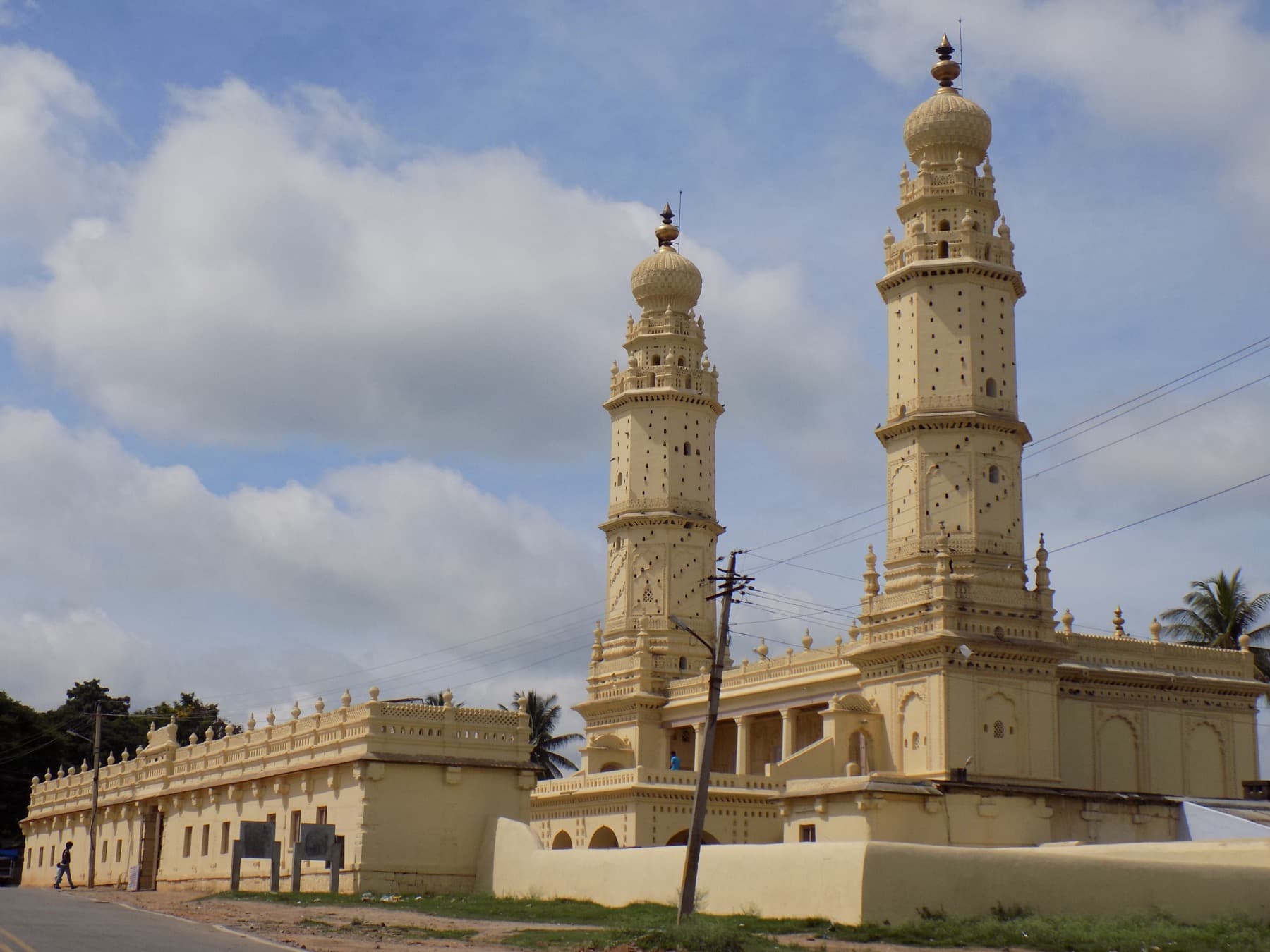
The island had been fortified for centuries — it takes its name from the great Ranganathaswamy temple, older than any of its walls — but Haidar Ali and Tipu Sultan rebuilt it into one of the strongest positions in India: double walls on the vulnerable western and northern fronts, wide ditches, bastioned batteries designed with French engineering advice, and the river itself as a moat, fordable only in the dry months. Inside the walls stood the palace complex, the treasury, magazines and rocket arsenals, the mint, the Jama Masjid Tipu Sultan built in 1784 — and the temple, which functioned throughout his reign a few hundred metres from his mosque.
The city and its monuments
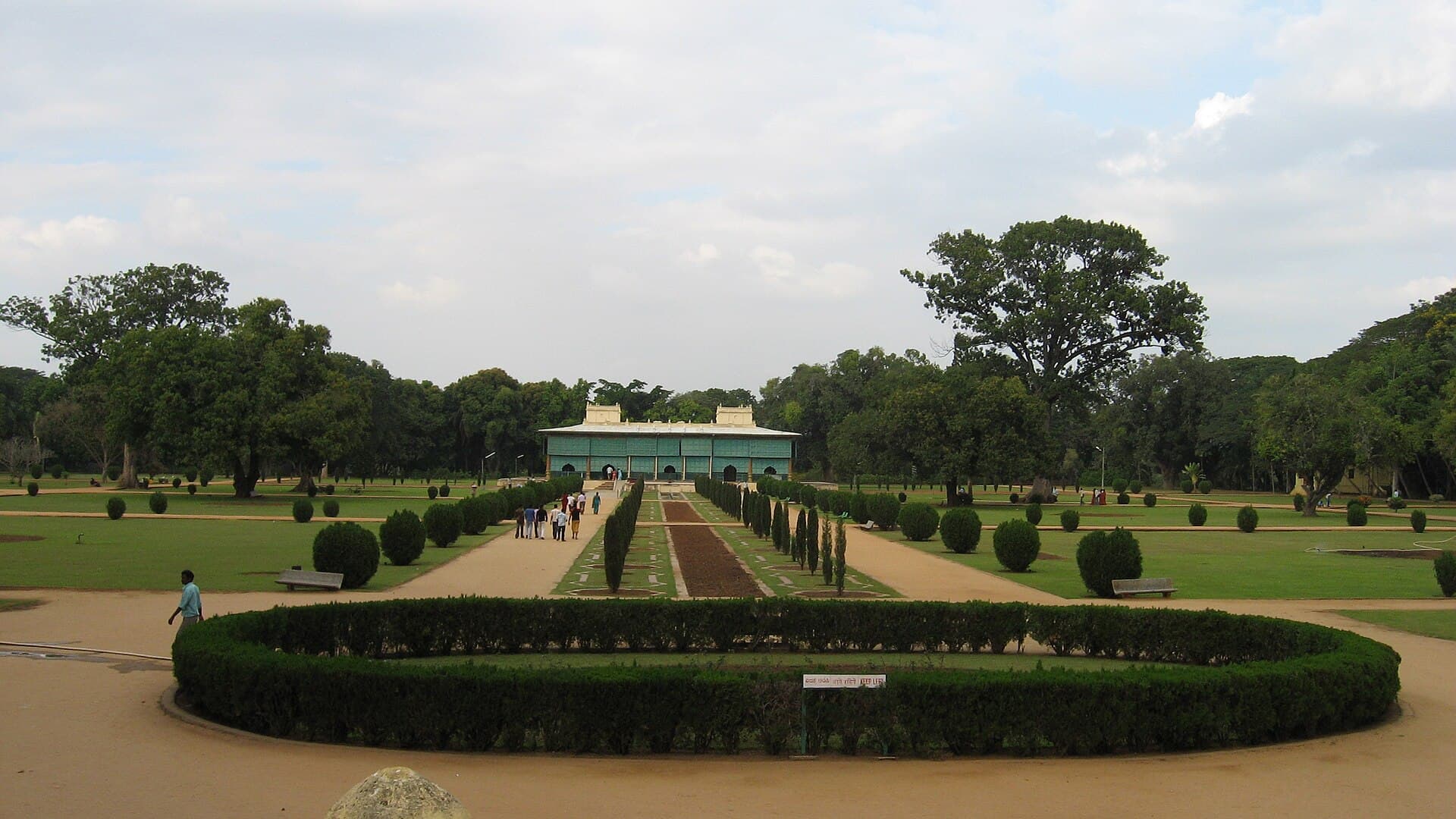
Daria Daulat Bagh. Tipu Sultan's summer palace east of the fort — teak, largely intact today — its walls covered in murals of which the most famous panel depicts the destruction of Baillie's column at Pollilur: Tipu Sultan's own commemoration of his greatest victory, painted where every visitor would see it.
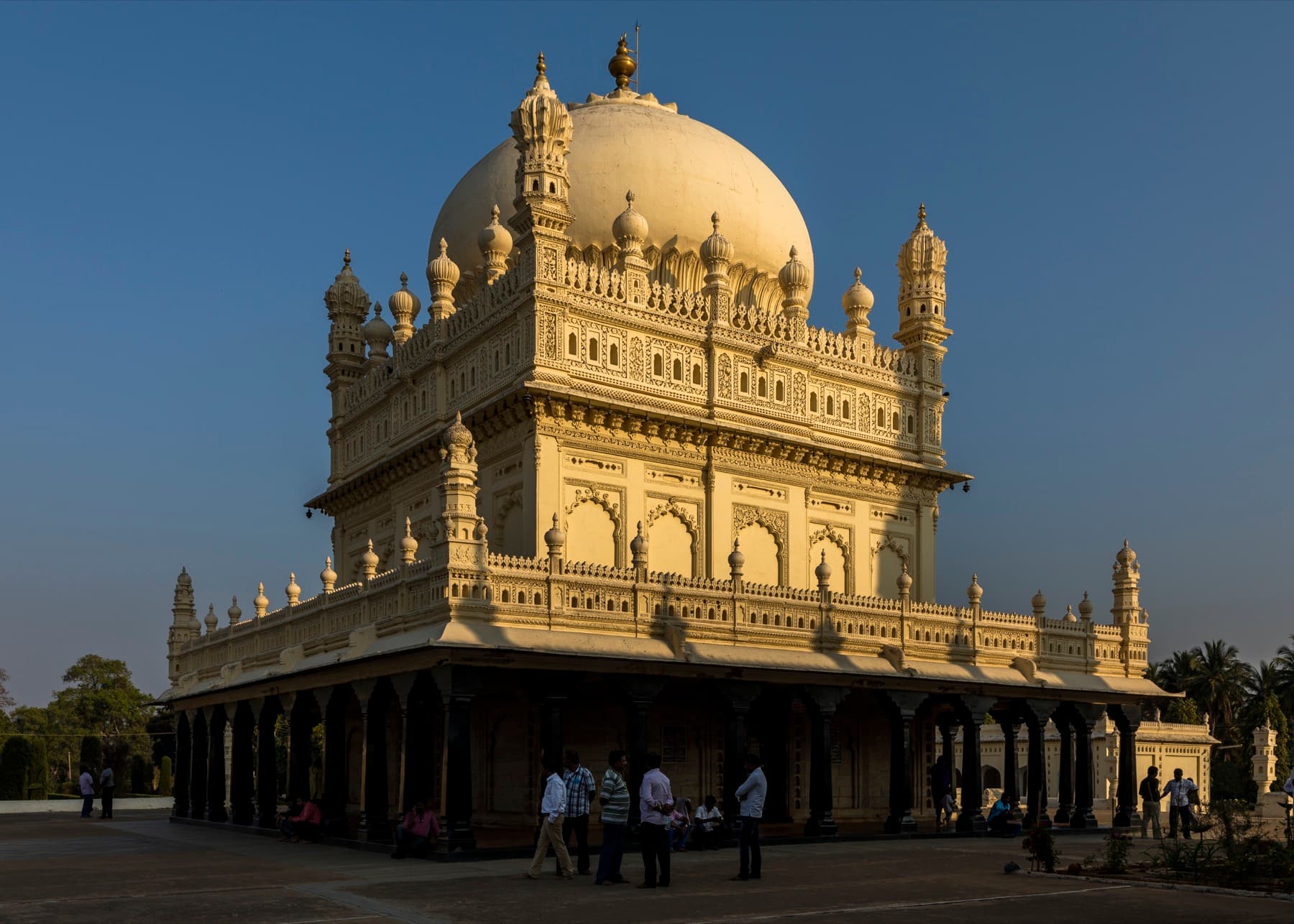
The Gumbaz. The domed mausoleum Tipu Sultan raised for Haidar Ali in an orchard south-east of the fort. His mother Fatima Fakhr-un-Nisa was buried there, and on 5 May 1799 the British buried Tipu Sultan himself beside them, with military honours, in the tomb he had built for his parents.
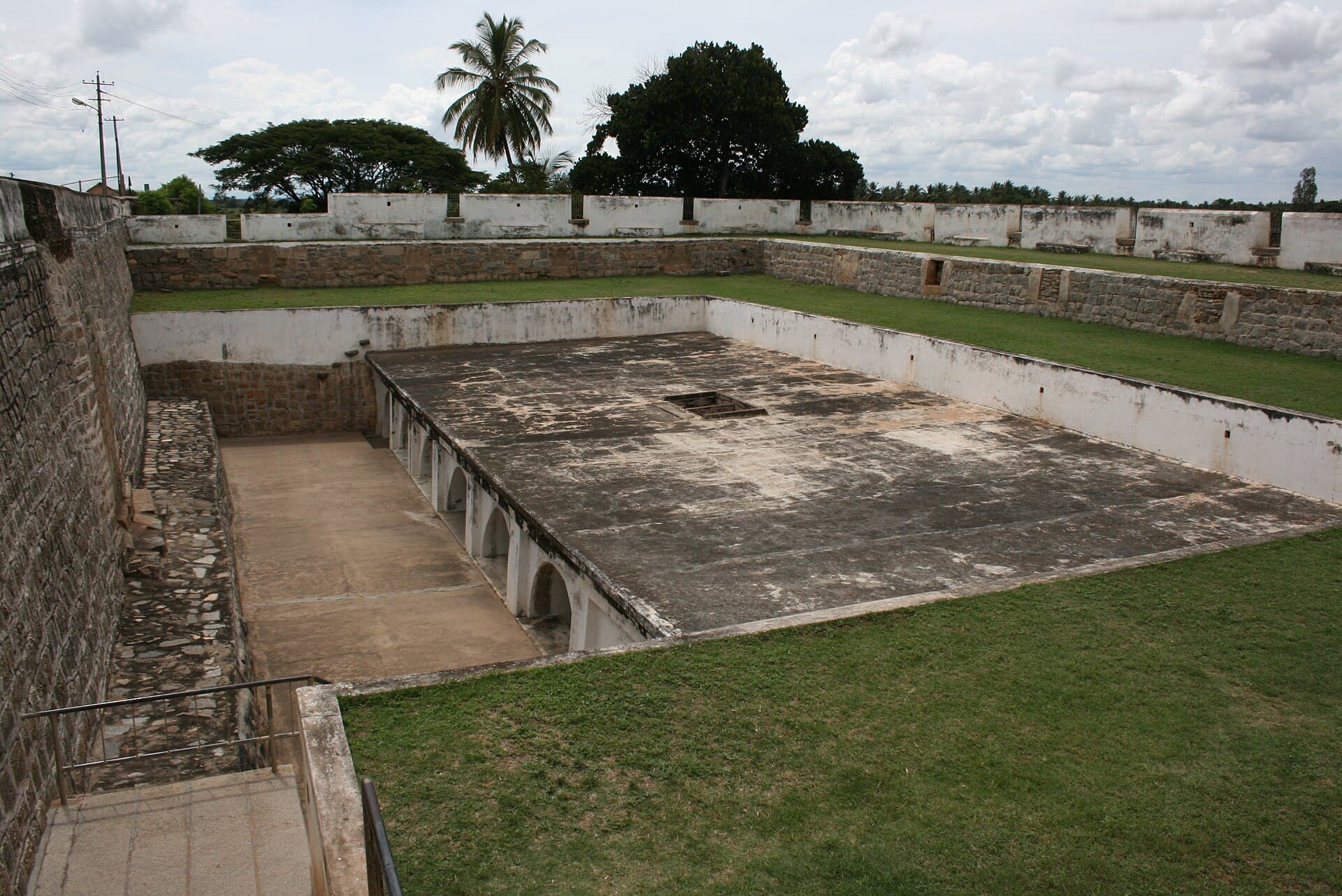
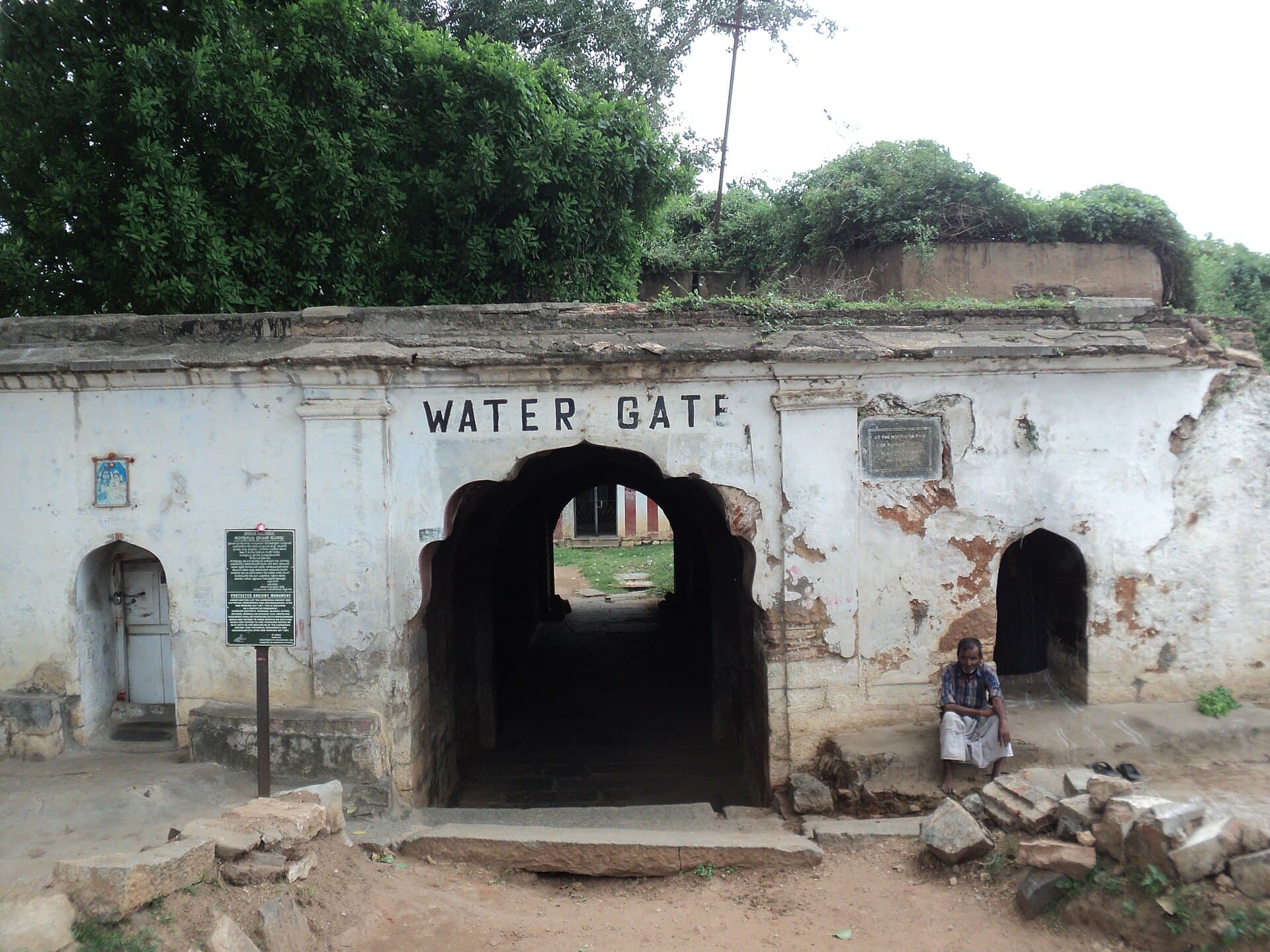
Lal Mahal. The main palace inside the fort, seat of the court and the tiger throne, was demolished in the decades after the conquest; its site is a marked ruin. The dungeons where British prisoners were held — including officers later prominent in the conquest — survive in the ramparts, as does the Water Gate, where Tipu Sultan's body was found.
1799 — the siege in brief
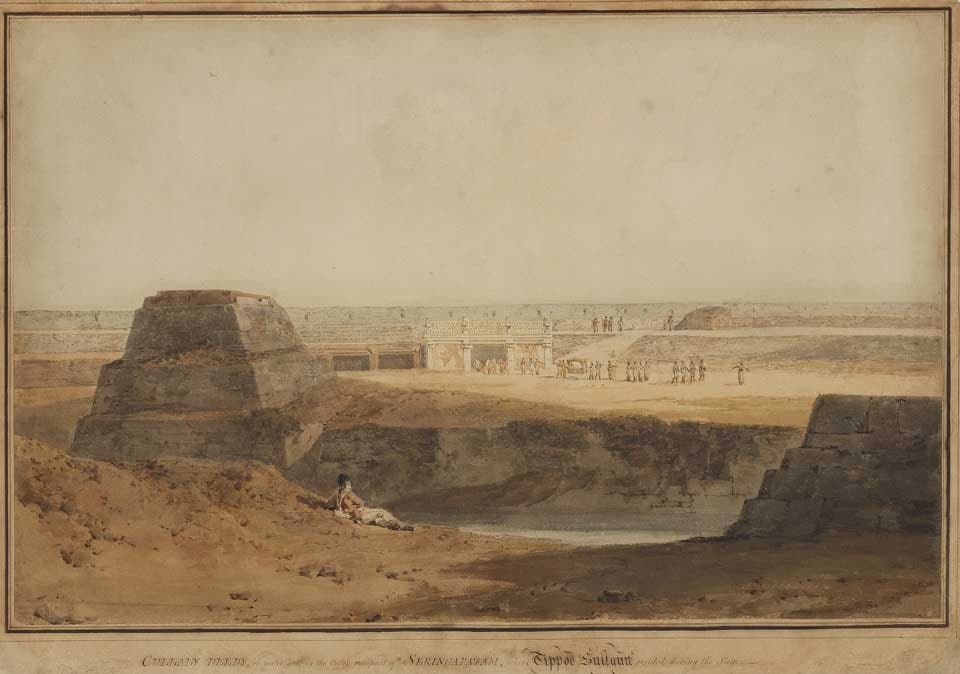
In April 1799 General Harris's combined army — some 50,000 fighting men including the Nizam's contingent, against perhaps 30,000 defenders — invested the island from the west. Batteries reduced the north-west angle of the walls through late April; by 3 May the breach was judged practicable. At about one o'clock in the afternoon of 4 May, chosen for the garrison's midday rest, General Baird led some 4,000 men across the shallow Kaveri and up the breach. Within hours the fort, the capital, and the state had fallen, and Tipu Sultan was dead — killed in the fighting near the Water Gate, unrecognized, having refused both escape and surrender.
Visiting today
Srirangapatna is an easy day trip from Mysuru or Bangalore. The surviving circuit: the fort walls and Water Gate, the breach site and obelisk, the spot where Tipu Sultan's body was found, the Jama Masjid, the Ranganathaswamy temple, Daria Daulat Bagh and its museum, and the Gumbaz. Allow a full day; go early for the light on the river.
Sources for this page
- Mohibbul Hasan, History of Tipu Sultan — chs. on the capital and the 1799 campaign.
- Alexander Beatson, A View of the Origin and Conduct of the War with Tippoo Sultaun (1800) — siege journal and plans.
- James Salmond, A Review of the Origin, Progress and Result of the War with Tippoo Sultaun (1800).
- Archaeological Survey of India, Srirangapatna monuments documentation.
- Anne Buddle, The Tiger and the Thistle: Tipu Sultan and the Scots in India (1999) — on siege participants and relics.
Full bibliography and how we weigh sources: Sources & Method