The Wars · Fortification
The Forts
Mysore's strategy needed places the enemy could not simply walk past. Tipu Sultan inherited a chain of hill fortresses, rebuilt them on European principles, and went on building new ones — including the outstanding example of Vauban-style star fortification in India.
- Capital
- Island fortress
- Star fort
- Manjarabad, 1792
- Coastal tower
- Mangalore, 1784
- Influence
- French military engineering
Why forts mattered so much
The Mysorean way of war depended on time. Cavalry stripped the country ahead of an invader and cut his convoys behind him; the longer he was forced to stay in the field, the likelier his army would starve before it arrived. Fortresses were the mechanism that bought that time — every fort a besieger could not leave in his rear was weeks of siege, casualties, and consumed supply.
It worked twice. It failed the third time not because the forts were weak but because Cornwallis brought allies who could keep him supplied while he reduced them one by one, then came back the following year with the road open.
The inherited chain
Four positions carried the system, all of them older than the dynasty and all rebuilt by it.
Srirangapatna
The capital, and the strongest position in the kingdom: an island in the Kaveri, rebuilt with double walls on the vulnerable western and northern fronts, a wide ditch, and bastioned batteries laid out with French engineering advice. The river was the outer work — and its dry-season fordability was the flaw that killed it in 1799.
Bangalore
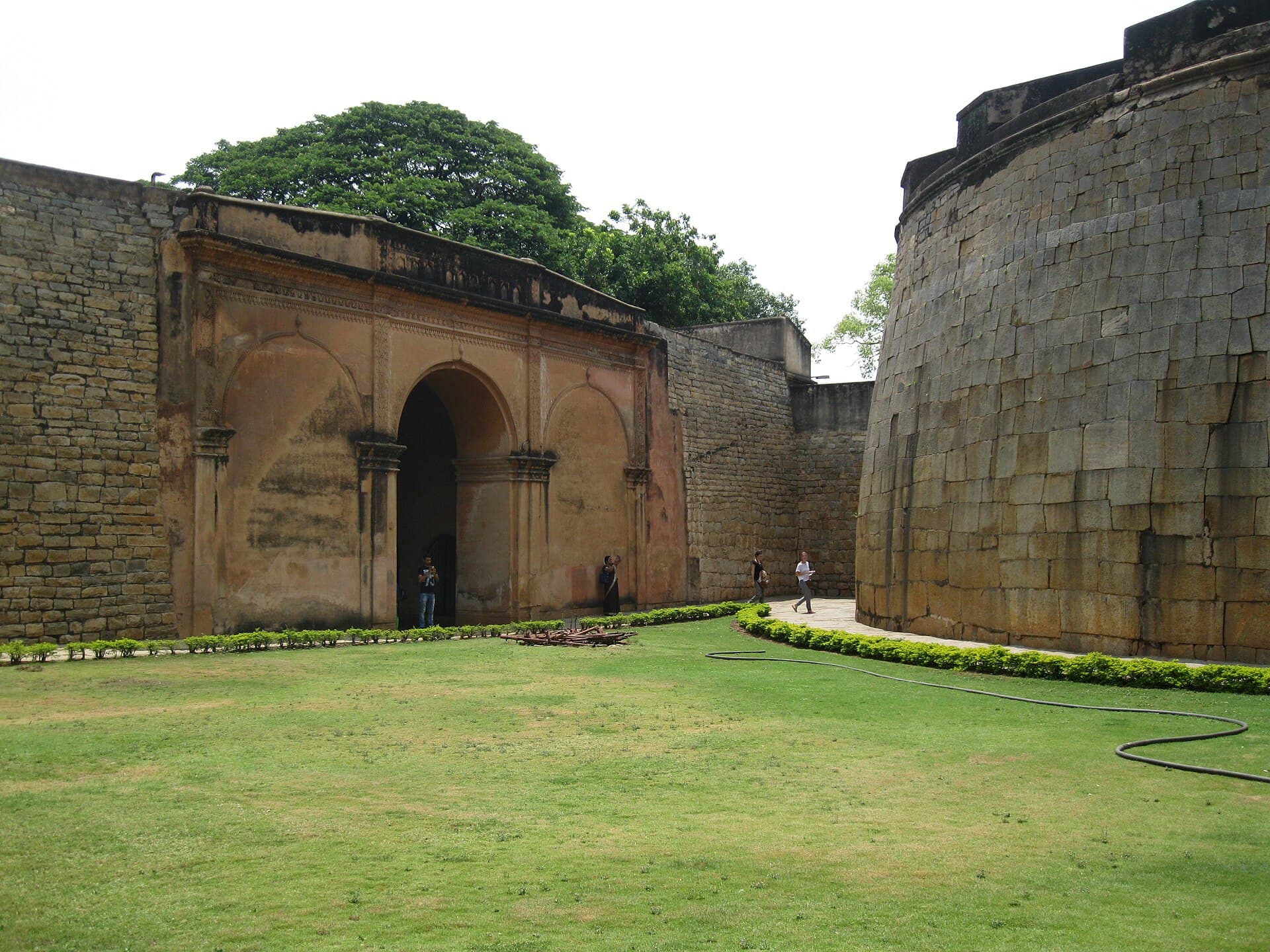
Fort and pettah (the walled town beside it), rebuilt in stone under Haidar Ali and Tipu Sultan and holding one of the kingdom's two arsenals. Cornwallis had to storm it in March 1791 before he could move on the capital — the assault on the Pettah gate cost Colonel Moorhouse his life and became a famous British battle painting.
Chitradurga
A vast hill fortress of successive walls threaded between granite boulders, taken by Haidar Ali in 1779 and held as a strongpoint of the northern frontier. It was also one of the four taramandalpets where rockets were manufactured.
Savandurga
A single enormous rock, widely considered impregnable and reportedly regarded as unhealthy to besiege. Cornwallis stormed it on 22 December 1791 after twenty days — a deliberate demonstration that no Mysorean fort was going to hold him up indefinitely.
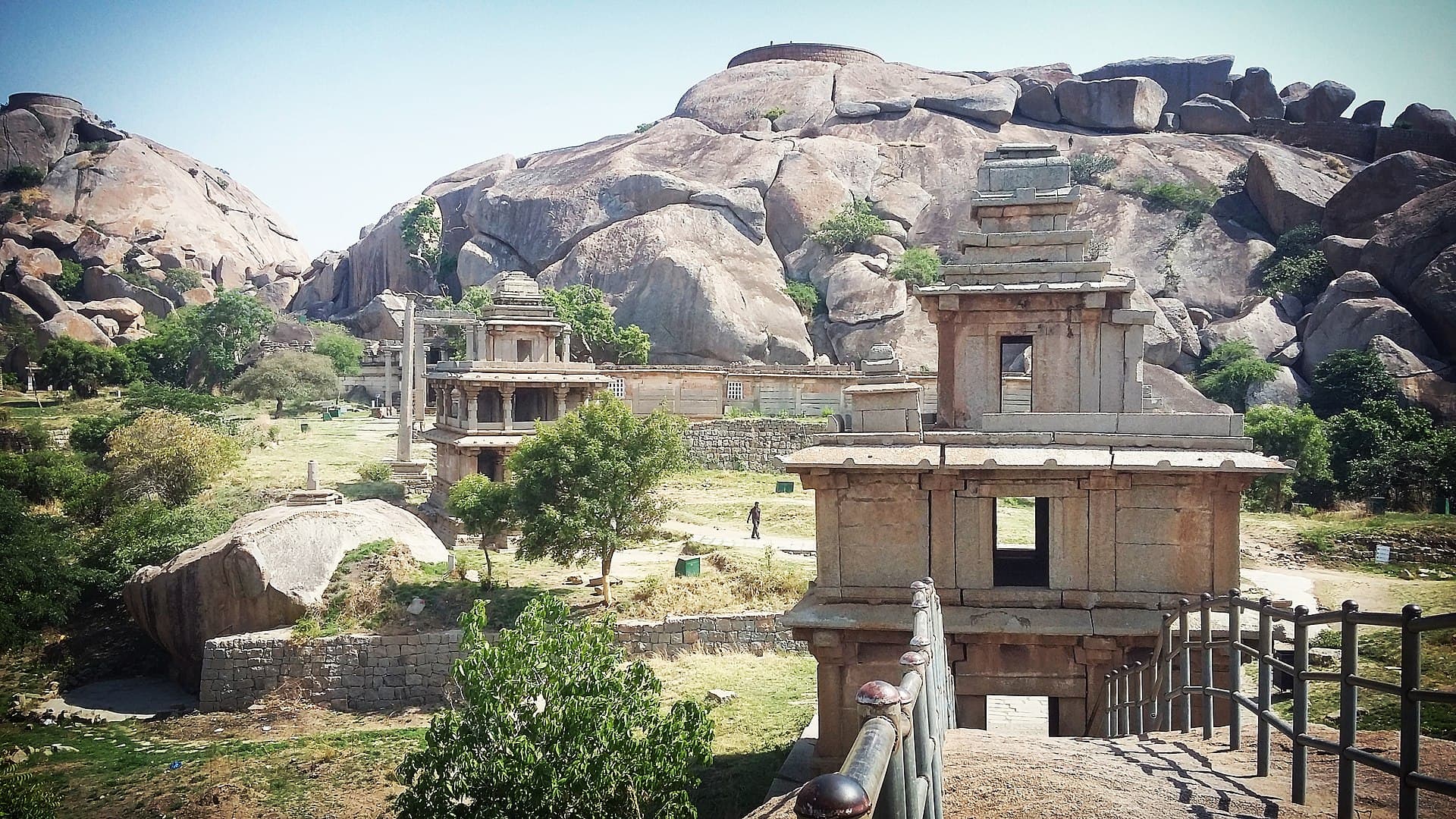
Modernisation — what actually changed
The medieval Indian hill fort was designed against escalade: high walls, difficult approaches, and height. It was not designed against a siege train firing solid shot at the base of a wall, which is what the East India Company brought.
Under Haidar Ali and Tipu Sultan, with French engineers in Mysorean service, the forts were reworked toward the European answer to artillery: lower, thicker walls that absorb shot rather than shatter; bastions and angled traces that let defenders sweep the ditch with flanking fire instead of shooting straight outward; wide ditches to keep guns at a distance; and layered batteries so that a breach in the outer line still leaves the attacker under fire. Magazines went underground.
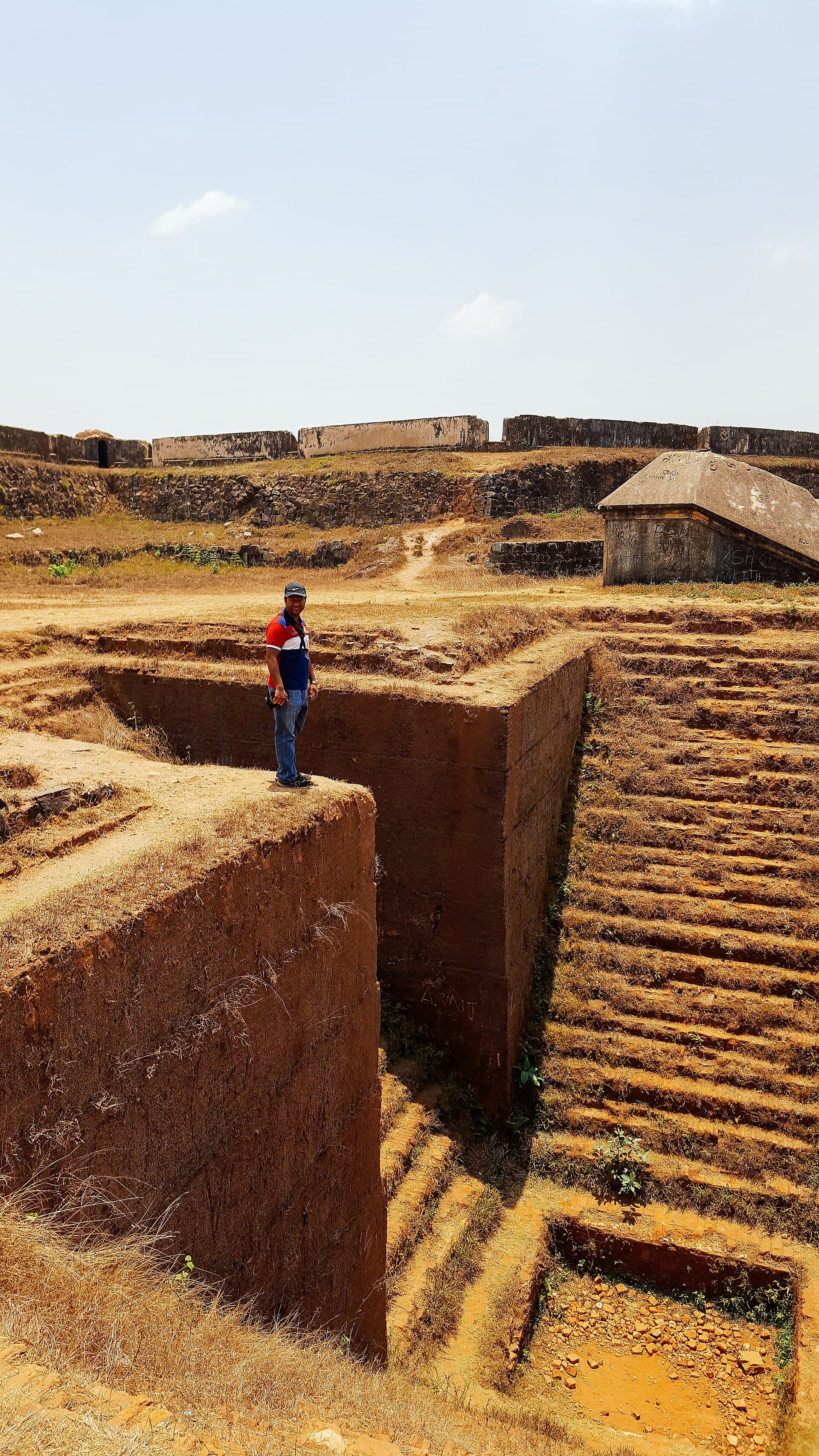
Manjarabad — the star fort above Sakleshpur
The clearest evidence of that programme is a fort Tipu Sultan built from nothing, in the Western Ghats above Sakleshpur, in 1792 — the year of the humiliating treaty, when he was rebuilding everything.
Manjarabad is an eight-pointed star fort, laid out by French engineers on the principles of Sébastien Le Prestre de Vauban — the standard European answer to gunpowder, in which every face of the wall is covered by fire from the faces beside it, leaving no dead ground for an attacker to shelter in. It is the outstanding example of Vauban-style military architecture in India.
Built of large granite blocks bedded in mud and ringed by a deep moat, it has chambers for the garrison, a parapet pierced for muskets with mountings for cannon, a cross-shaped reservoir to collect rainwater — a fort on a ridge must solve water before anything else — and two underground cellars for gunpowder. The gateways carry ornate arches and columns in the Islamic manner: a European trace with a Mysorean face.
The name is said to come from the Kannada manju, fog, for the mist that shrouded the site while it was being built. Local tradition adds a tunnel running all the way to Srirangapatna — a story attached to a great many Indian forts, and to be enjoyed rather than believed.
Sultan Battery, Mangalore — facing the sea
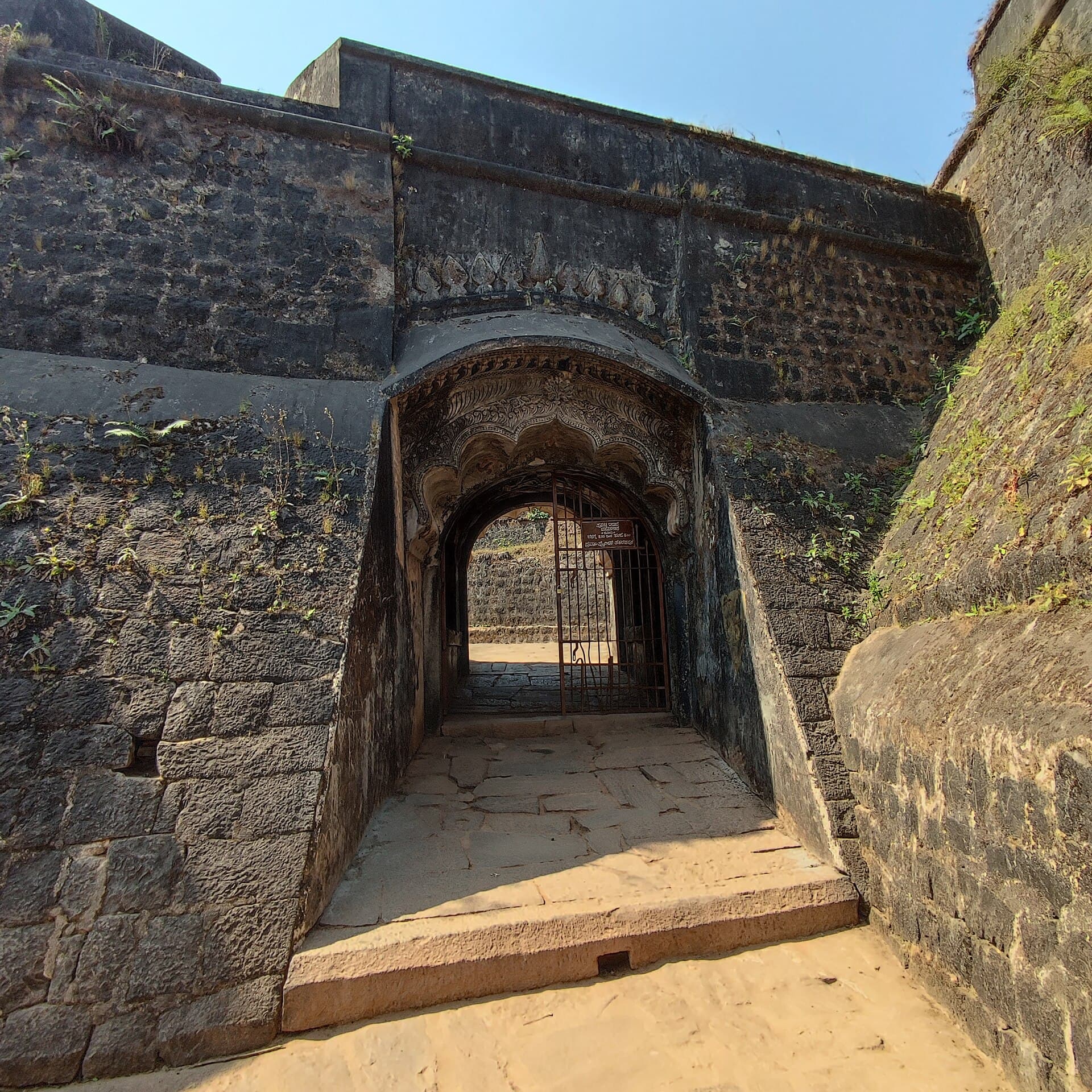
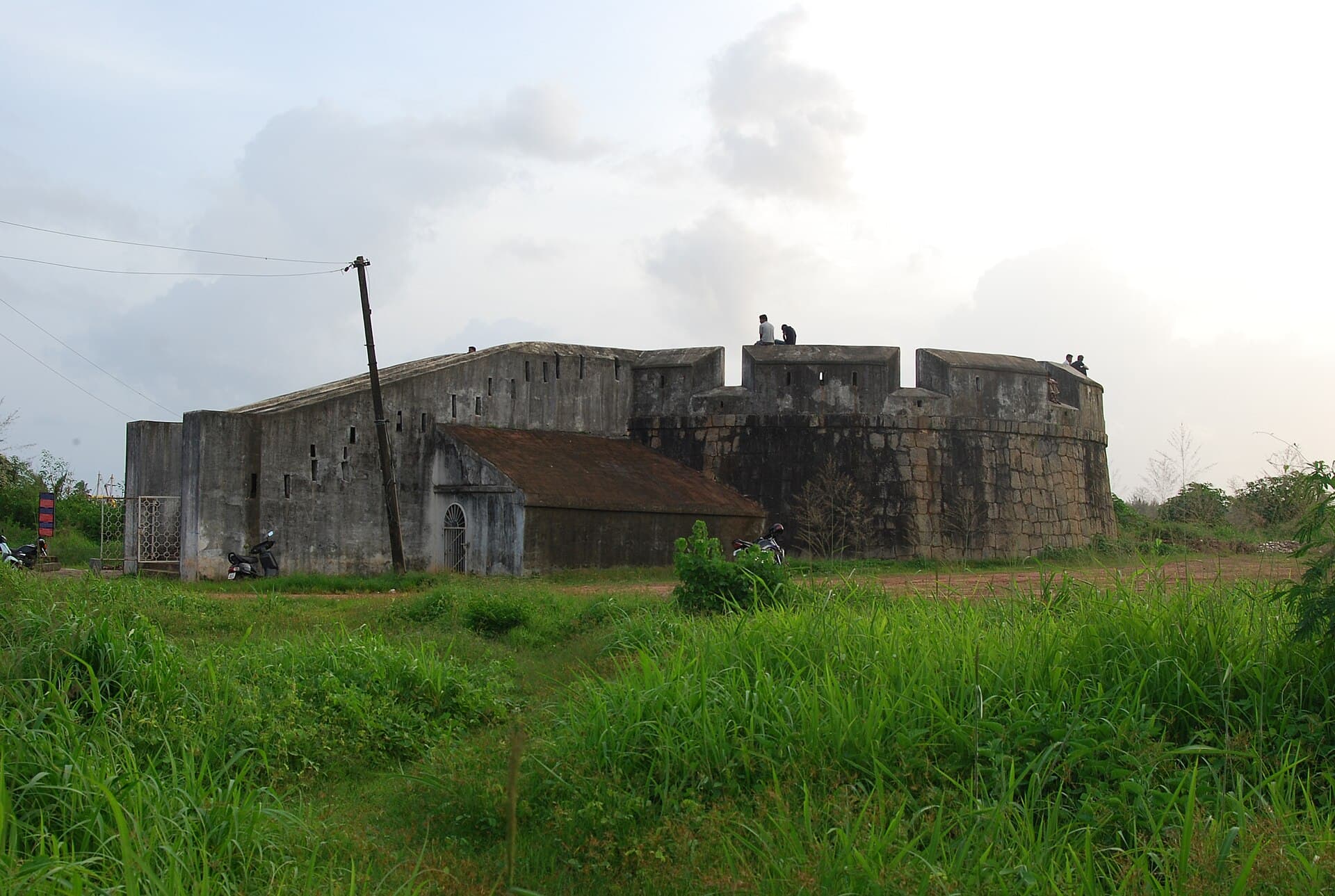
The other half of the problem was the coast, because the Company's real advantage was naval. In 1784, the year of the Treaty of Mangalore, Tipu Sultan built a watchtower and gun position at the mouth of the Gurupura river at Mangalore, to stop British ships entering the estuary and reaching the town from the water.
Sultan Battery is a squat, immensely solid structure of black stone, pierced with embrasures for cannon commanding the river mouth, mixing Indo-Islamic forms with a purely functional military purpose. It belongs with the shipyards and the Board of Admiralty of 1796: a ruler who had understood that the war would ultimately be decided by who controlled the sea, and who did not have time left to do anything about it. After the conquest the British took it over and used it, aptly, as a naval office. It still stands.
What the system was worth
Judged by 1799 the fortresses failed: the capital fell in an afternoon. Judged over thirty years they did their work. They forced the Company into three sieges it did not want, defeated Cornwallis's first advance without a battle, and obliged him to spend most of 1791 reducing Nandidurg and Savandurga before he could try again. Fortification bought Mysore the time in which everything else — the embassies, the factories, the navy — was attempted. It simply could not manufacture allies.
For the campaigns in which these places were attacked, see the Third War and the Fourth; for the capital itself, see Srirangapatna.
Sources for this page
- Mohibbul Hasan, History of Tipu Sultan — on the forts and the campaigns against them.
- Alexander Beatson, A View of the Origin and Conduct of the War with Tippoo Sultaun (1800) — siege plans of Srirangapatna.
- Major Dirom, A Narrative of the Campaign in India (1794) — on Bangalore, Nandidurg and Savandurga.
- Archaeological Survey of India documentation for Manjarabad Fort and Sultan Battery, Mangalore.
- Irfan Habib (ed.), Confronting Colonialism (2002) — on French engineering in Mysorean service.
Full bibliography and how we weigh sources: Sources & Method