The Innovator · The Living Institutions
Kunigal Stud Farm
An army that fought the way Mysore's did — fast, mounted, always somewhere the enemy had not planned for — needed horses by the thousand, and Tipu Sultan did not trust the supply to chance or to horse-dealers. In the 1790s he built a breeding establishment at Kunigal, west of Bangalore. It has been breeding horses ever since.
- Founded
- c. 1790
- Bred for
- The Mysore cavalry
- After 1799
- British & Mysore remounts
- Today
- India's oldest stud farm
An army that moved
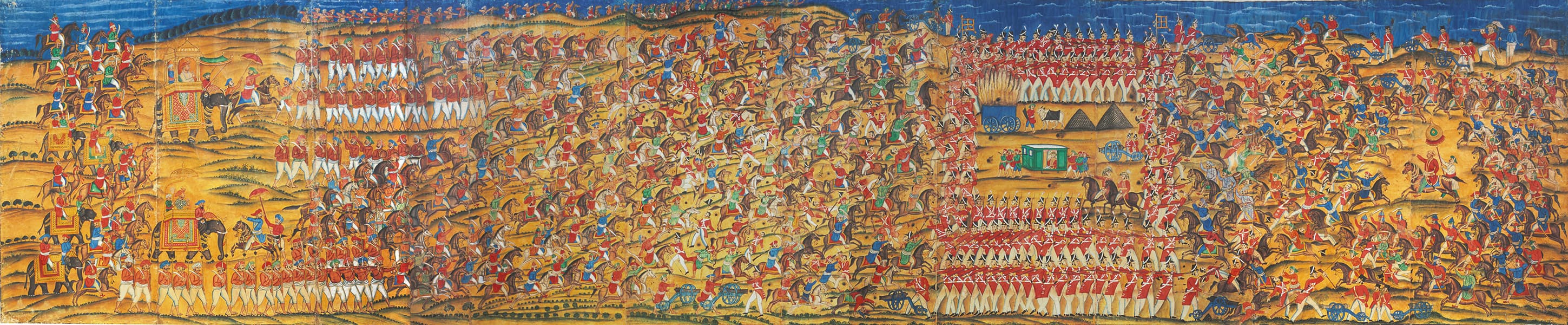
Mysore's military reputation was built on speed. The cavalry Nawab Haidar Ali Khan raised and Tipu Sultan codified was respected by the Marathas — themselves the finest light horse in India — and feared by the British, whose supply columns and foraging parties it made a career of destroying. In 1783 Tipu Sultan covered roughly a hundred kilometres in about two days to fall on Bednur; the Fathul Mujahidin wrote the cavalry's organisation into regulation, as it did everything else.
That way of fighting consumes horses — to campaign, to disease, to simple wear — and an army that must buy its remounts from northern horse-fairs in wartime is an army with a hostage supply line. The answer was the same one Mysore gave for guns, rockets and silk: make it at home, and make it a department.
Breeding as state science
The farm was laid out at Kunigal, in present-day Tumakuru district, around 1790. The site was not an accident: accounts of the founding describe selection by climate, by water — the town's great tanks are still there — by soil, and by the quality of the grasses the paddocks would grow. The horse was treated as a production problem with biological inputs, which is precisely what makes the farm read as science rather than as a princely stable.
The account preserved in the History of Islam encyclopedia describes the establishment at its height in detail: over a thousand acres, with well over a hundred stables housing horses separated by age and by breed, stalls built facing one another because horses are herd animals and sicken alone, drainage worked into the slopes, belts of trees planted as wind and noise breaks, and a veterinary hospital with its own offices and stores. Young horses were schooled in the movements war would demand of them — turning, stopping, lunging — before they were handed to the regiments.
The bullock establishment
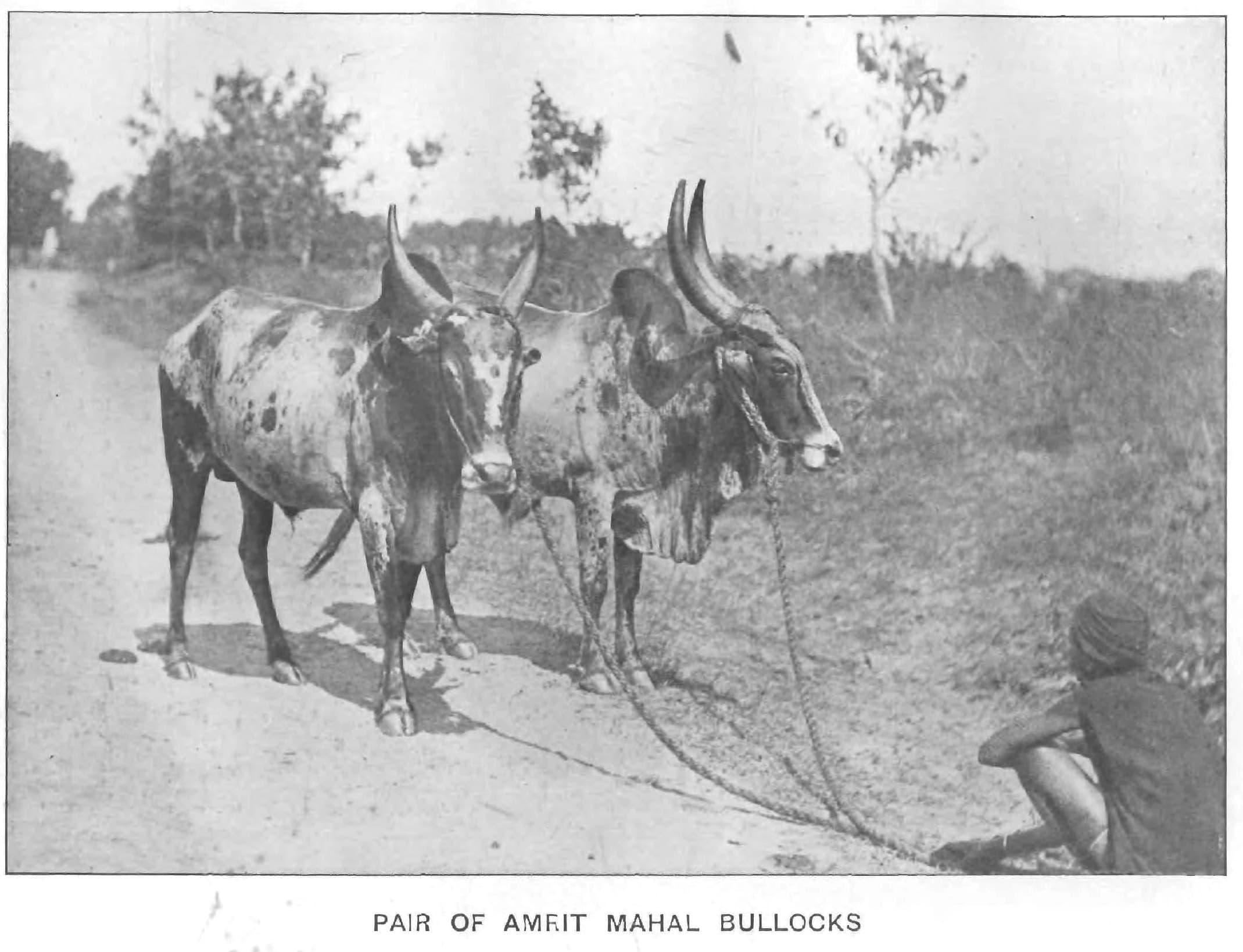
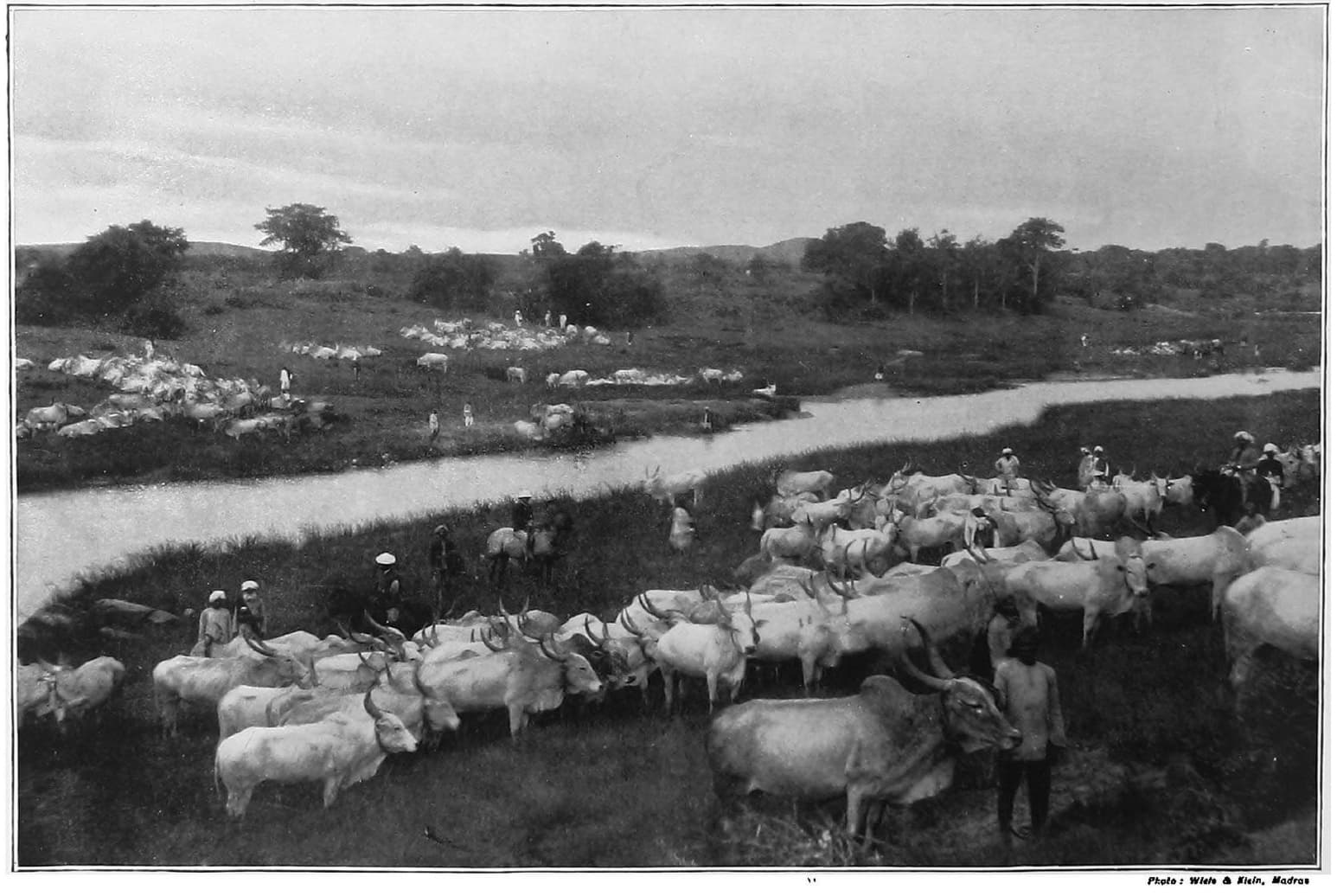
The horses were half the logistics answer. The other half pulled the guns: Mysore's famous white draught cattle, bred tall, fast-walking and tireless. The herds were older than the dynasty, but it was under Haidar Ali and Tipu Sultan that they became a military department — Tipu Sultan gave it the name Amrit Mahal, ordered an annual head-count of the herds, and rewarded the best of the kavals, the hereditary herdsmen, in gold and silver. When the artillery moved fast enough to surprise British columns, it moved on Amrit Mahal bullocks.
The British understood exactly what they had captured. They kept the establishment running — the Commissariat farm at Hunsur carried the herds through the nineteenth century, and Amrit Mahal bullocks hauled British guns on campaigns far from Mysore. The breed is recognised and conserved in Karnataka to this day.
Two centuries of new owners, one working farm
After 1799 the farm passed to the British Army, which bred Arabian remounts there for its cavalry regiments; then to the Mysore kingdom's military department under the restored Maharajas; then, in 1948, to the state government. In 1992 the Government of Karnataka leased it to United Racing & Bloodstock Breeders — the racing operation of Vijay Mallya, a name this site has met before: the same man bought one of Tipu Sultan's swords at auction in 2004. The founder's relics and the founder's farm briefly had the same custodian.
Under the turf era the farm bred thoroughbreds instead of chargers — among them Adler, unbeaten in nine races in India and the first Indian-bred horse to win in the United States — and took leading stud farm honours at Bangalore in the 2000s. Its lease and future have been publicly contested in recent years, with campaigns urging Karnataka to protect it as living heritage; what nobody disputes is the description at the heart of the campaign: the oldest stud farm in India, in continuous operation since the 1790s.
That makes Kunigal one of a very small family of Tipu Sultan's institutions that are still doing the job he built them for — alongside Lalbagh, still a botanical garden, and the silk industry, still Mysore's. The empires that took the state could use what it had built; they could not improve on the idea.
Sources for this page
- Nazeer Ahmed, 'Tipu Sultan: Development of Army Logistics, Agriculture and Environmental Protection', History of Islam encyclopedia (online) — the detailed account of the farm's layout, site selection and training regime, and of the Amrit Mahal census and rewards; sympathetic and unfootnoted, used here with that stated.
- Public records and standard references on Kunigal Stud Farm — founding under Tipu Sultan in the 1790s, British Army and Mysore military use, transfer to the state in 1948, the 1992 lease to United Racing & Bloodstock Breeders, and the farm's racing record.
- Contemporary reporting on the lease controversy and the campaigns to protect the farm as heritage.
- Mohibbul Hasan, History of Tipu Sultan — on the Mysore cavalry and the army's logistics.
- On the Amrit Mahal breed: Mysore government publications and the breed's modern conservation records in Karnataka.
Full bibliography and how we weigh sources: Sources & Method