Innovation · Afterlife
Abdul Kalam and the Mysorean Rocket
The man who built India's missiles walked into a NASA building in Virginia and found a painting of Tipu Sultan's rocketmen on the wall. He had to cross the world to be told his own country's history.
- The painting
- NASA Wallops, Virginia
- Known as
- Missile Man of India
- Sent to Srirangapatna
- DRDO, 2006
- Lecture
- Bangalore, 1991
The painting in the lobby
Wallops Flight Facility on the Virginia coast is the home of NASA's sounding rocket programme — an unglamorous place where rockets are actually launched rather than talked about. Abdul Kalam, then a young Indian rocket engineer on a training visit, walked into the reception area and noticed a painting of a battle, with a rocket in flight across it.
He looked closer. The men firing the rockets were not European. They were South Asian — and the painting turned out to show Tipu Sultan's army firing rockets at British troops, hung in the lobby of an American rocket base as part of the ancestry of the thing they did there.
He wrote about it afterwards in his autobiography Wings of Fire, and the detail that stayed with him was not national pride but embarrassment at the asymmetry: a piece of Indian history displayed as a founding episode of rocketry by Americans, and largely unknown to Indian schoolchildren — including, until that moment, to the engineer standing in front of it.
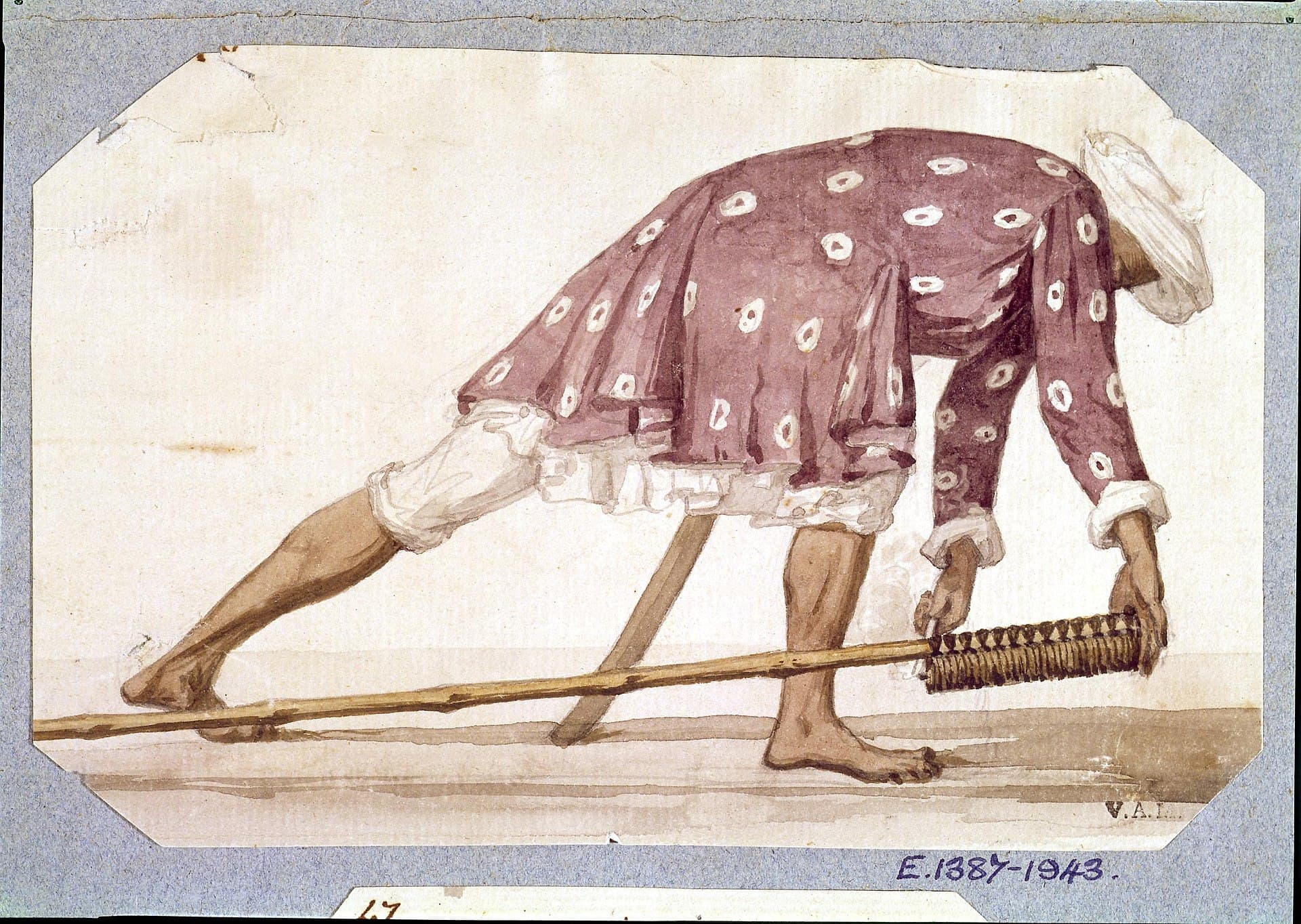
Who was standing there
The encounter matters because of who had it. Kalam went on to be project director of SLV-III, the launcher that put India's first satellite into orbit from an Indian rocket in 1980, and then to lead the Integrated Guided Missile Development Programme — Prithvi, Agni, Trishul, Akash and Nag. It earned him the name he is still known by, the Missile Man of India, and he served as President of India from 2002 to 2007.
He returned to the subject for the rest of his life, and twice did something more substantial than reminisce.
The lecture, Bangalore, 30 November 1991
Kalam delivered the Tipu Sultan Shaheed Memorial Lecture in Bangalore on 30 November 1991 — at that point the head of India's guided-missile programme, speaking in the city that held one of Mysore's two arsenals, about the rockets fired from it two centuries earlier.
In it he called Tipu Sultan the innovator of the world's first war rocket. That is the formulation people quote, and it is worth reading precisely: not the inventor of the rocket, which nobody serious claims, but the first person to turn the rocket into a weapon of war — cased in iron, made in quantity, and organised into units. That is exactly the claim the technical literature supports.
He also made the point that the evidence is not hidden. Two Mysorean rockets taken at Srirangapatna are held in the Royal Artillery Museum in London: the objects themselves survive, in the collection of the army they were fired at.
The mission to Srirangapatna, 2006
The second act came from the presidency. Rather than commission a history, Kalam sent an engineer. In 2006 he despatched Dr A. Sivathanu Pillai — then Chief Controller of Research and Development at the DRDO, and later the head of BrahMos Aerospace, which built India's supersonic cruise missile — to Srirangapatna to examine the sites where Tipu Sultan's rockets had been made and fired.
The image is worth pausing on: the man responsible for India's most advanced missile standing in the ruins of an eighteenth-century rocket works, sent there by the head of state. At the end of the visit Pillai said there was no doubt that this was the birthplace of rocketry.
The 2018 excavation at Nagara — the old Bidanur, one of the four taramandalpets — which brought more than a thousand iron rockets out of a well, arrived twelve years after Pillai's visit and vindicated the instinct behind it.
What the connection is
The honest version of this story is a matter of memory rather than engineering, and it is more interesting told straight.
The circle it closes
Set end to end, the route is genuinely strange. Iron-cased rockets are mass-produced in four Mysorean towns and fired at the East India Company; the Company takes the survivors of its arsenal to Woolwich; Congreve turns them into a British weapon that is fired at Fort McHenry in 1814 and written into the American national anthem; the United States builds a rocket programme; and a century and a half later an Indian engineer visiting that programme is shown a picture of where it started, and goes home to build his own country's rockets.
Kalam's point was never that Mysore built Agni. It was that a country should know what it has already done.
Sources for this page
- A. P. J. Abdul Kalam, Wings of Fire: An Autobiography (1999) — the Wallops Flight Facility painting.
- A. P. J. Abdul Kalam, Tipu Sultan Shaheed Memorial Lecture, Bangalore, 30 November 1991 — where he called Tipu Sultan the innovator of the world's first war rocket.
- Reporting on the 2006 DRDO visit to Srirangapatna by Dr A. Sivathanu Pillai, later head of BrahMos Aerospace.
- Royal Artillery Museum, London — surviving Mysorean rockets taken at Srirangapatna.
- Roddam Narasimha, 'Rockets in Mysore and Britain, 1750–1850' (National Aeronautical Laboratory, 1985) — the technical study of the Mysorean and Congreve rockets.
- Published accounts of Kalam's career: SLV-III, the Integrated Guided Missile Development Programme, and the presidency (2002–2007).
- Reporting on Kalam's references to Tipu Sultan as a pioneer of rocketry, treated as secondary where his own words are not quoted.
Full bibliography and how we weigh sources: Sources & Method